Adding new production machinery to a working factory requires careful electrical planning.
Wessex Electrical Services Three phase distrubution board installaler.j
An engineering company at its Frenchman's Road factory in Petersfield was preparing to install two robot welders. The machinery area needed a new three-phase electrical distribution system, industrial socket outlets and a supply for a 10kVA 110V transformer.
Wessex Electrical Services installed a 160A three-phase submain using approximately 45 metres of 50mm² five-core steel wire armoured cable.
The new distribution arrangement included:
- A 200A three-phase isolator
- A 200A busbar chamber
- 100A three-phase switched-fuse isolators fused down to 80A
- Two eight-way three-phase distribution boards with Surge Protection
- 32A three-phase sockets
- Metal-clad 230V sockets
- A supply for a 10kVA 110V transformer
We completed the installation over approximately one week. Most of the cable, and support work took place out of the company’s normal working hours.
The final connection at the factory’s main distribution panel required a planned isolation. We completed that part of the project out of hours at the weekend to reduce disruption to production.
Why did the factory need additional electrical distribution?
The engineering company needed additional three-phase capacity for two new robot welders and their supporting equipment.
Robot welders form part of a wider manufacturing system. The machinery area can require three-phase outlets, single-phase sockets and 110V equipment supplies, all positioned around the working layout.
The electrical installation needed to support:
- Two robot welders
- A 110V transformer
- Metal-clad 230V socket outlets
- 32A three-phase socket outlets
- Associated equipment within the machinery area
The existing main distribution panel was some distance from the new welding area. Running every final circuit back to the main panel would have created longer individual cable routes and a less practical arrangement.
Installing local distribution equipment gave the customer a dedicated point for the new machinery supplies.
What did Wessex Electrical Services assess before starting the work?
We assessed the existing electrical installation, the proposed machinery area and the route between the main panel and the new distribution equipment.
The survey considered:
- The factory’s existing three-phase supply
- The proposed 160A submain
- Available capacity at the main distribution panel
- Protective-device requirements
- The cable size and route
- The position of the new boards
- The industrial environment
- Access around racking and machinery
- Isolation requirements
- The effect of a shutdown on production
The customer needed the factory to continue operating while most of the work took place. That influenced how we divided the installation between normal working hours and the final weekend connection.
Planning the cable route and completing the distribution assembly before the shutdown reduced the amount of work required while the main supply was isolated.
What supply cable did Wessex Electrical Services install?
We installed approximately 45 metres of 50mm² five-core steel wire armoured cable.
The cable provided the new three-phase submain between the main distribution panel and the machinery distribution area.
At the main panel, the new supply was protected by an Eaton NZM1 160A MCCB with a 25kA breaking capacity.
Cable selection for an industrial supply needs to consider the expected load, protective device, route length, installation method, voltage drop and fault-current conditions.
The steel wire armoured construction also provides mechanical protection suited to many commercial and industrial cable routes.
How was the SWA cable routed through the factory?
We routed the 50mm² SWA cable along the frame of the factory building.
The cable was clipped directly to the structure using cable cleats and metal all-round banding. The supports held the cable throughout its route between the main distribution panel and the new board position.
Handling and installing a five-core SWA cable of this size requires planning. The route passed through a working engineering environment with production equipment, storage areas and large racking systems.
We coordinated access around the company’s normal operation and completed the cable installation during working hours.
This allowed the main physical installation to progress without shutting down the complete factory.
Where were the new distribution boards installed?
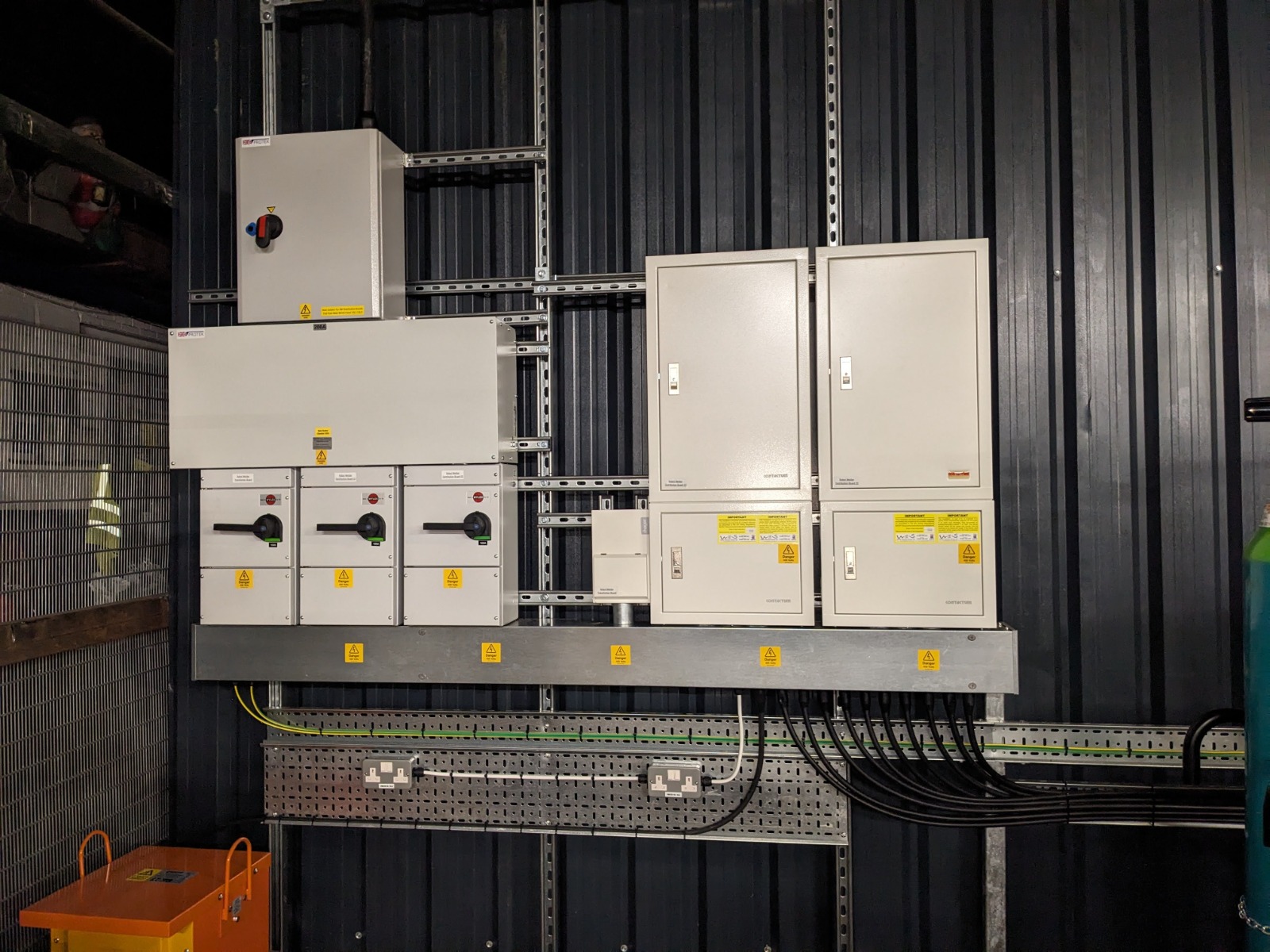
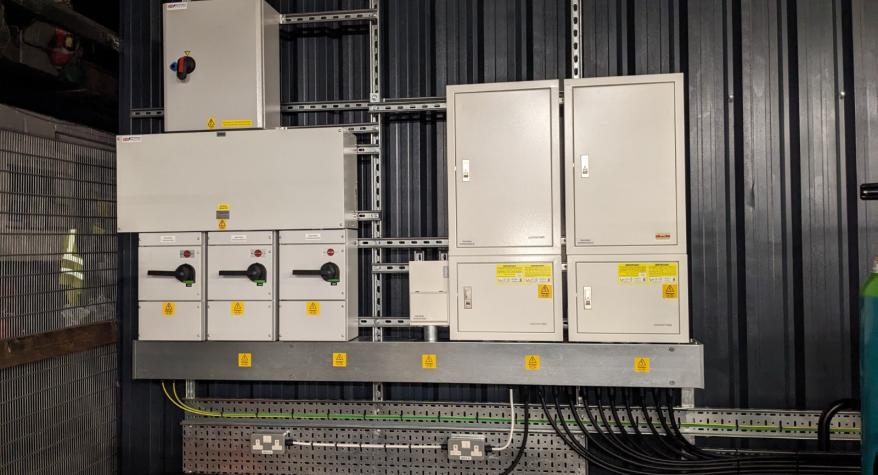
Wessex Electrical Services built a Unistrut frame at the back of a large racking system towards the top of the factory.
The frame created a dedicated mounting position for the new distribution equipment and placed it close to the planned robot-welding area.
The installation included:
- A 200A three-phase isolator
- A 200A busbar chamber
- 100A three-phase switched-fuse isolators
- Two eight-way three-phase distribution boards
Building a separate Unistrut frame provided a secure structure for the equipment. It also kept the electrical arrangement together in a defined location with access for isolation, inspection and future maintenance.
The position worked with the factory layout and reduced the length of the final circuits supplying the welding area.
What was the purpose of the 200A three-phase isolator?
The 200A three-phase isolator provided a local means of isolating the new distribution arrangement.
Local isolation allows the customer or an electrician to disconnect the new equipment from its incoming supply when required for inspection, maintenance or future alterations.
The 200A rating suited the distribution equipment used within the new arrangement. The upstream submain remained protected by the Eaton NZM1 160A MCCB at the main distribution panel.
The isolator was installed alongside the busbar chamber and switched-fuse equipment on the new Unistrut frame.
Why was a 200A busbar chamber installed?
The 200A busbar chamber formed the central distribution point for the new machinery supplies.
The incoming three-phase supply entered the distribution arrangement through the local isolator. The busbar chamber then allowed the supply to be distributed to the 100A three-phase switched-fuse isolators serving the new boards.
This created an organised arrangement for the two eight-way distribution boards and their connected circuits.
The busbar chamber also gave WES a practical way to assemble the equipment around the requirements of the machinery area while keeping the protective and isolation devices clearly grouped.
What did the 100A switched-fuse isolators supply?
The 100A three-phase switched-fuse isolators provided protected and controllable feeds for the new distribution boards. Note, these were fused down to 80a.
Each board could be isolated separately when required. This arrangement also provided fused protection between the busbar chamber and the downstream boards.
The two eight-way three-phase distribution boards supplied the agreed equipment around the robot-welding area, including:
- 32A three-phase socket outlets
- Metal-clad 230V socket outlets
- The 110V transformer supply
- Supplies associated with the two robot welders
Clear separation and circuit identification help the customer understand which equipment each board controls.
Did Wessex Electrical Services install the robot welders?
Wessex Electrical Services prepared the electrical supplies for the robot welders.
We installed the three-phase distribution system, industrial sockets and associated electrical infrastructure. The robot welders were then plugged into the prepared outlets and set up for production.
Keeping this distinction clear matters. Our work provided the electrical system needed for the machinery, while the robot-welding equipment itself was installed and configured as part of the customer’s machinery setup.
Once the electrical installation had been inspected, tested and energised, both robot welders could be connected to the new supplies.
Why was the main connection completed at the weekend?
The final connection required access to the factory’s main distribution panel and a planned electrical isolation.
Carrying out that work during normal production could have affected machinery and other equipment elsewhere in the factory.
We therefore scheduled the main connection out of hours at the weekend.
Before the shutdown, we had already:
- Installed the 45-metre SWA cable
- Built the Unistrut frame
- Mounted the isolator and busbar chamber
- Installed the switched-fuse isolators
- Mounted both distribution boards
- Installed the agreed socket outlets
- Prepared the cable terminations
This preparation reduced the work required during the planned isolation.
During the weekend connection, we connected the submain to the Eaton NZM1 160A MCCB, completed the terminations at the new distribution arrangement and carried out the required inspection and testing.
How long did the complete installation take?
The project took approximately one week.
Most of the installation could be completed while the engineering company continued operating. This included the cable route, Unistrut frame, distribution equipment and final-circuit work.
The connection requiring the main-panel isolation was left until the weekend.
Dividing the work into these stages limited disruption and gave the customer a clear programme. Production could continue through most of the project, with the supply interruption arranged outside the company’s normal working hours.
For a factory, the timing of an electrical shutdown can be as important as the installation itself. Unplanned loss of power can affect machinery, computers, lighting and production schedules.
What inspection and testing did WES complete?
We inspected and tested the completed electrical installation before placing it into service.
The testing covered the new submain, distribution equipment and final circuits installed as part of the project.
This included the relevant checks for:
- Protective-conductor continuity
- Insulation resistance
- Polarity
- Earth-fault loop impedance
- Protective devices
- Phase arrangement
- Circuit identification
The results were recorded on the electrical certification issued for the completed work.
We also labelled the new isolator, busbar chamber, switched-fuse equipment, distribution boards and final circuits. Clear identification helps the customer and future electricians understand the arrangement.
What was the final result?
The completed installation provided the engineering company with the electrical infrastructure required for its two new robot welders.
The factory gained:
- A new 160A three-phase submain
- A 200A three-phase isolator
- A 200A busbar chamber
- 100A three-phase switched-fuse isolators
- Two eight-way three-phase distribution boards with Surge Protection
- 32A three-phase sockets
- Metal-clad 230V sockets
- A supply for a 10kVA 110V transformer
- Inspection, testing and electrical certification
The robot welders were plugged into the prepared supplies, set up and made ready for work.
By carrying out the main installation during normal hours and completing the final panel connection at the weekend, WES reduced the effect of the work on the customer’s production.
Three-phase installations for engineering companies
Wessex Electrical Services Ltd carries out three-phase distribution, machinery supplies and commercial electrical installations for engineering companies and other businesses around Petersfield, Alton and the surrounding Hampshire area.
If you are planning new machinery, the electrical requirements need considering early. Available capacity, distribution equipment, cable routes, protective devices and shutdown arrangements can all affect the project.
Wessex Electrical Services can assess your existing installation, discuss the machinery requirements and plan the work around your operating hours.
Call Wessex Electrical Services on 01420 384247 to discuss a commercial distribution-board installation or new machinery supply.