Outdoor lights causing problems in Kempshott? See how Wessex Electrical Services Ltd found a defective PIR and water-damaged patio lights.
Wessex Electrical Services Outdoor Security Light Repairs Kempshott, PIR and Water Ingress Faults
Why Were These Outdoor Lights Working at the Wrong Times?
Outdoor lighting becomes frustrating when it cannot be relied upon.
At a home near Redwing Road in Kempshott, the front security floodlight did not operate consistently. It sometimes remained on during the day, yet on other occasions failed to work when it was dark.
The customer also had problems with two lights positioned beside the rear patio doors. These fittings did not operate correctly and could cause the electrical protection to trip.
The problems had been present since the customer moved into the property. Wessex Electrical Services Ltd inspected the lights, controls and accessible wiring to establish whether the faults came from the settings, sensors, fixed wiring or condition of the fittings.
What was wrong with the front security light?
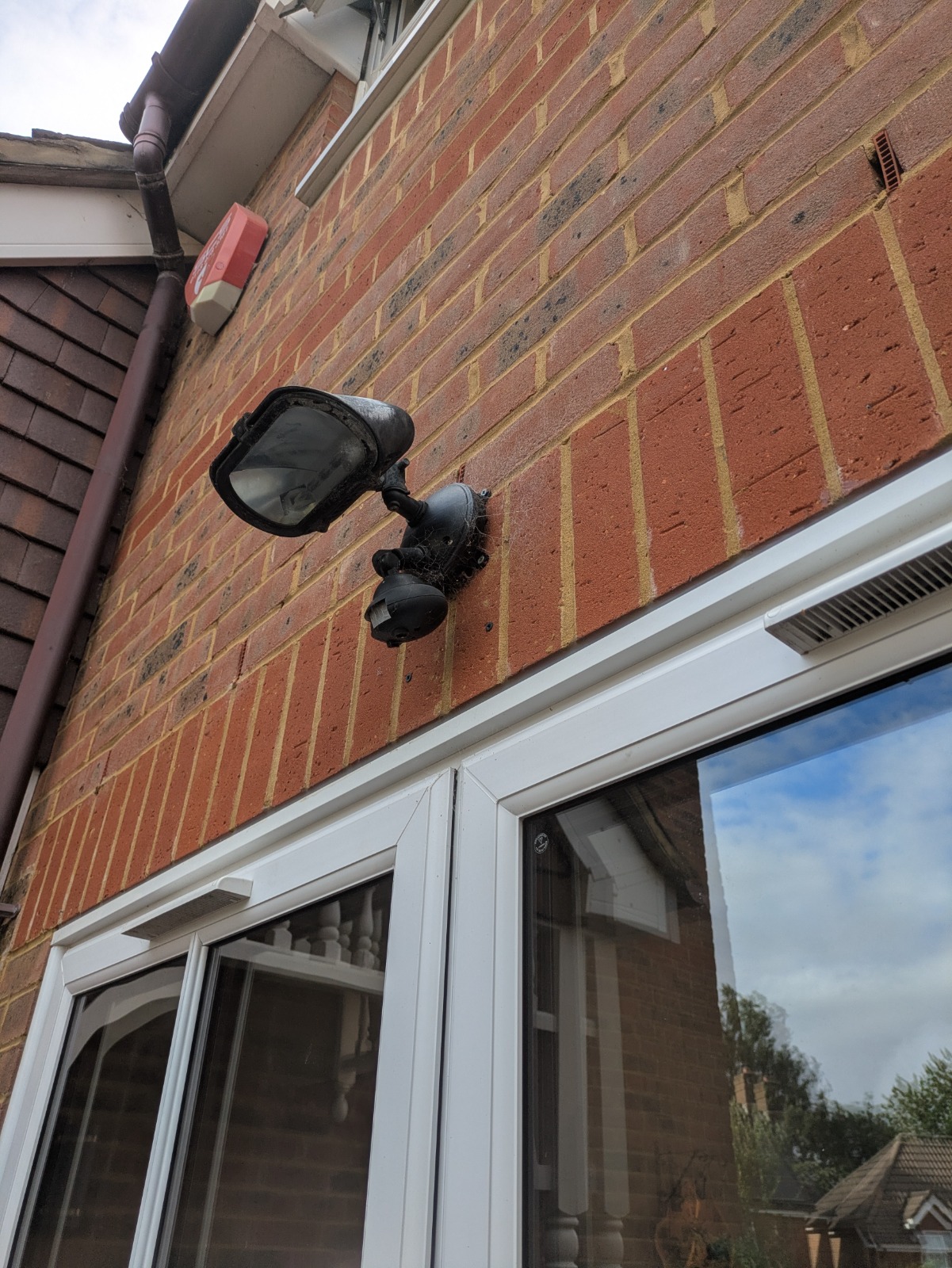
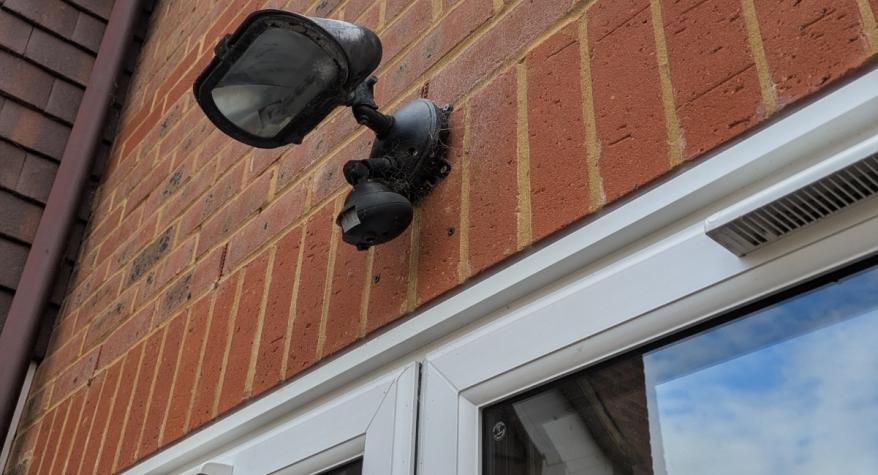
The front fitting was an older halogen floodlight with a PIR detector and daylight control.
It covered the driveway and was intended to switch on when movement was detected after dark. Its operation had become unpredictable. It could remain illuminated during daylight and sometimes failed to operate at night.
A security light behaving this way may have an unsuitable control setting, a failed PIR detector, a defective daylight sensor or a problem with its electrical supply.
We checked the fitting and its controls rather than assuming that an adjustment would solve the problem.
The inspection confirmed that the PIR detector was defective. This explained why the light was no longer responding reliably to movement and changing light levels.
Could the PIR settings have caused the problem?
The controls can cause similar symptoms, so they needed to be considered during the investigation.
A typical PIR floodlight may include separate adjustments for sensitivity, time delay and daylight operation. The sensitivity affects the detection range. The time setting controls how long the light remains on, while the daylight control determines the level of darkness at which the detector becomes active.
Incorrect settings can make a serviceable light operate at unexpected times. They cannot restore reliable operation when the detector itself has failed.
At this property, the condition and behaviour of the existing unit showed that replacement was required.
What was wrong with the lights beside the patio doors?
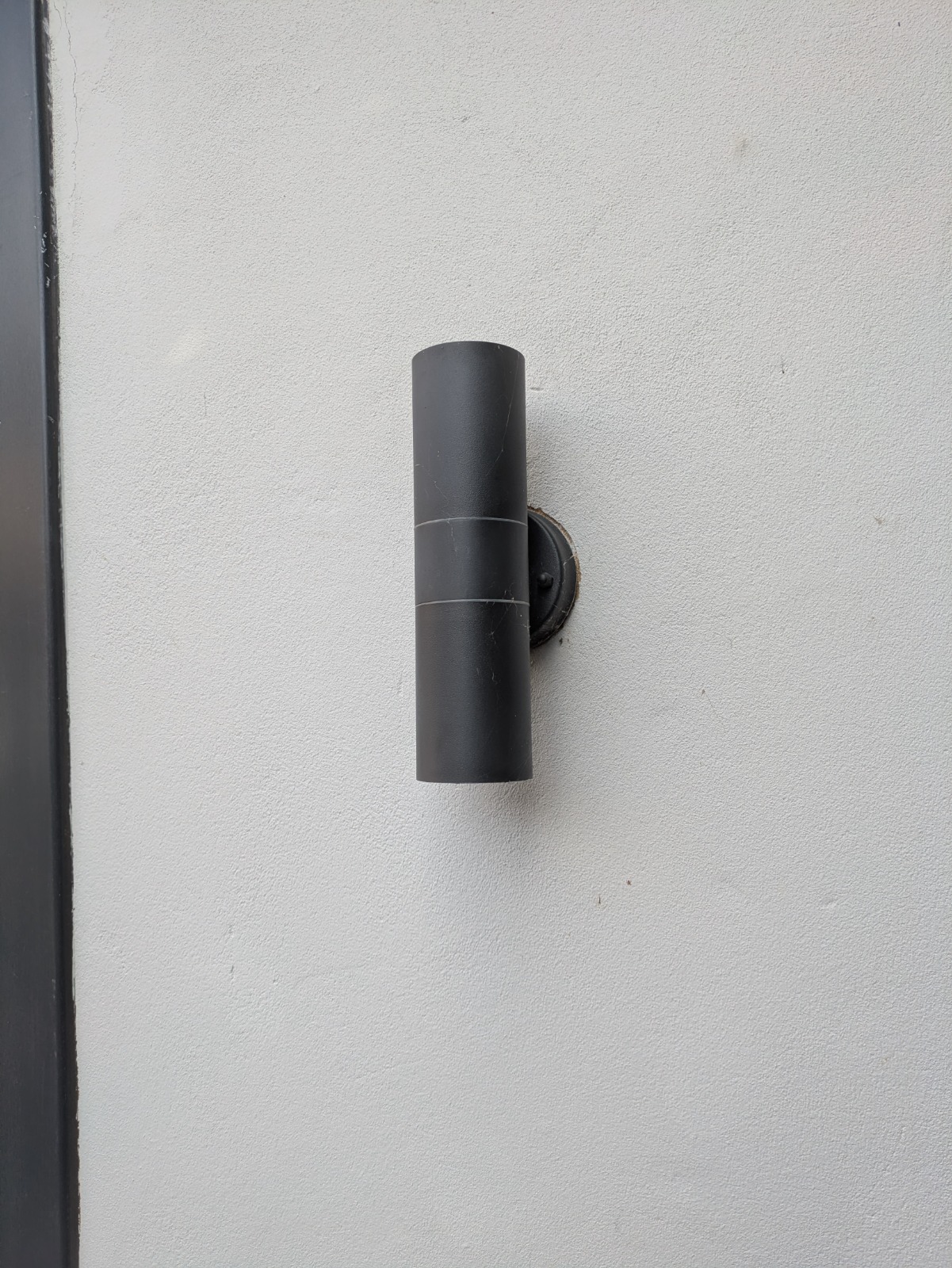
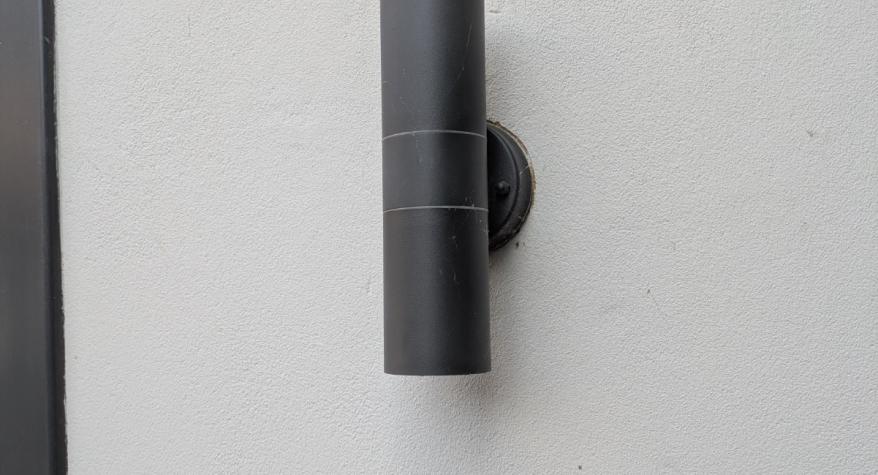
The rear fittings were older up-and-down wall lights positioned on either side of the patio doors.
Each fitting used GU10 lamps at the top and bottom. The customer reported that the lights did not work correctly and could cause the electrical protection to trip.
Our inspection found that the fittings had been poorly installed and water had entered them. Outdoor wall lights need correctly sealed cable entries, suitable fixings and a sound seal against the mounting surface where required.
If moisture reaches the lamp holders, terminals or internal wiring, the fitting may become unreliable and cause an RCD to disconnect the affected circuits.
At this Kempshott property, water ingress within the rear lights was the confirmed cause of the tripping problem.
Why did the outdoor lights trip the electrics?
Moisture had reached electrical parts within the rear light fittings.
The lighting circuit was protected through MCBs on a split-load, dual-RCD consumer unit. The RCD was responding when the water-affected fittings created an electrical fault.
An RCD that trips is doing an important job. Repeatedly resetting it without finding the cause can leave the customer with continuing disruption and a damaged fitting still connected to the installation.
Wessex Electrical Services Ltd isolated the affected lighting and inspected the accessible cables and connections. The fixed wiring was twin and earth cable entering from behind the light fittings, concealed within the fabric of the building.
This made the condition of the cable entries and the way the fittings had been mounted particularly important.
What did Wessex Electrical Services Ltd inspect?
We inspected the front floodlight, the two rear wall lights, their accessible connections and the internal switching arrangement.
The front floodlight included a PIR detector and covered the driveway. The rear lights were operated by an internal switch.
We checked:
- The visible condition of all three fittings
- The front PIR and daylight controls
- The cable entries behind the lights
- Accessible terminations and conductor condition
- Evidence of water ingress or corrosion
- The internal switch controlling the rear lights
- The circuit protection at the consumer unit
The front floodlight was old and its PIR detector was defective. The rear lights were also old, poorly installed and affected by water ingress.
These were separate faults requiring appropriate replacement work.
Why was replacement recommended?
Replacement was recommended because the front detector had failed and the rear fittings had allowed water to enter.
Adjusting the front controls would not provide reliable operation with a defective PIR. Drying the rear lights would not address their age, condition or the installation problems that had allowed moisture inside.
Wessex Electrical Services Ltd explained the findings to the customer before replacing the affected fittings.
The completed work included:
- Removing the defective halogen PIR floodlight
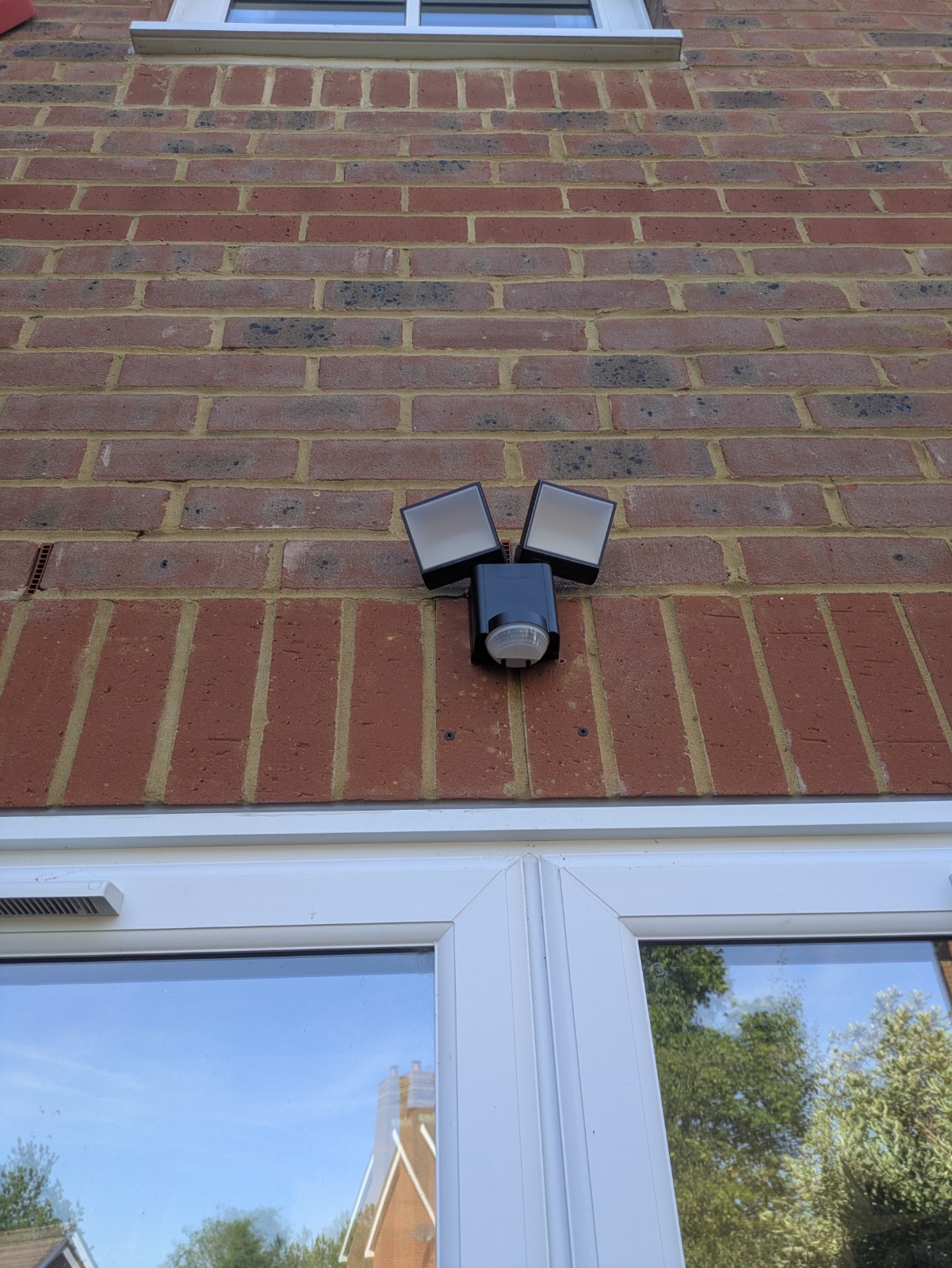
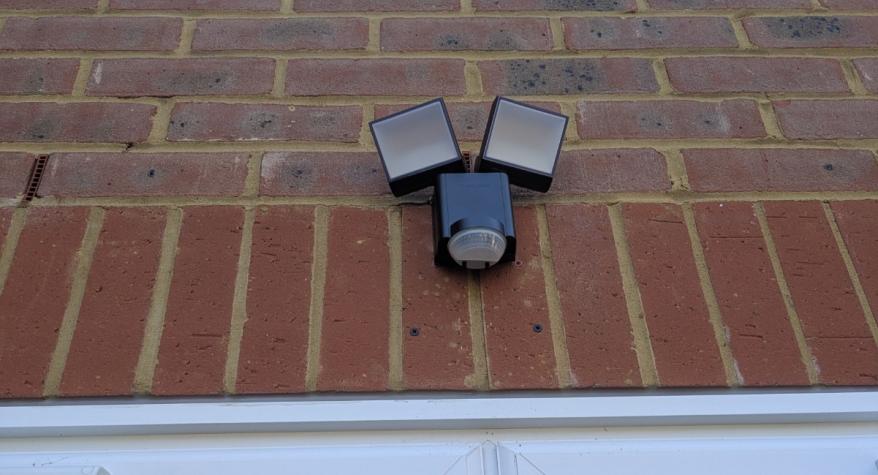
- Installing a replacement outdoor security light
- Removing the two water-damaged up-and-down lights
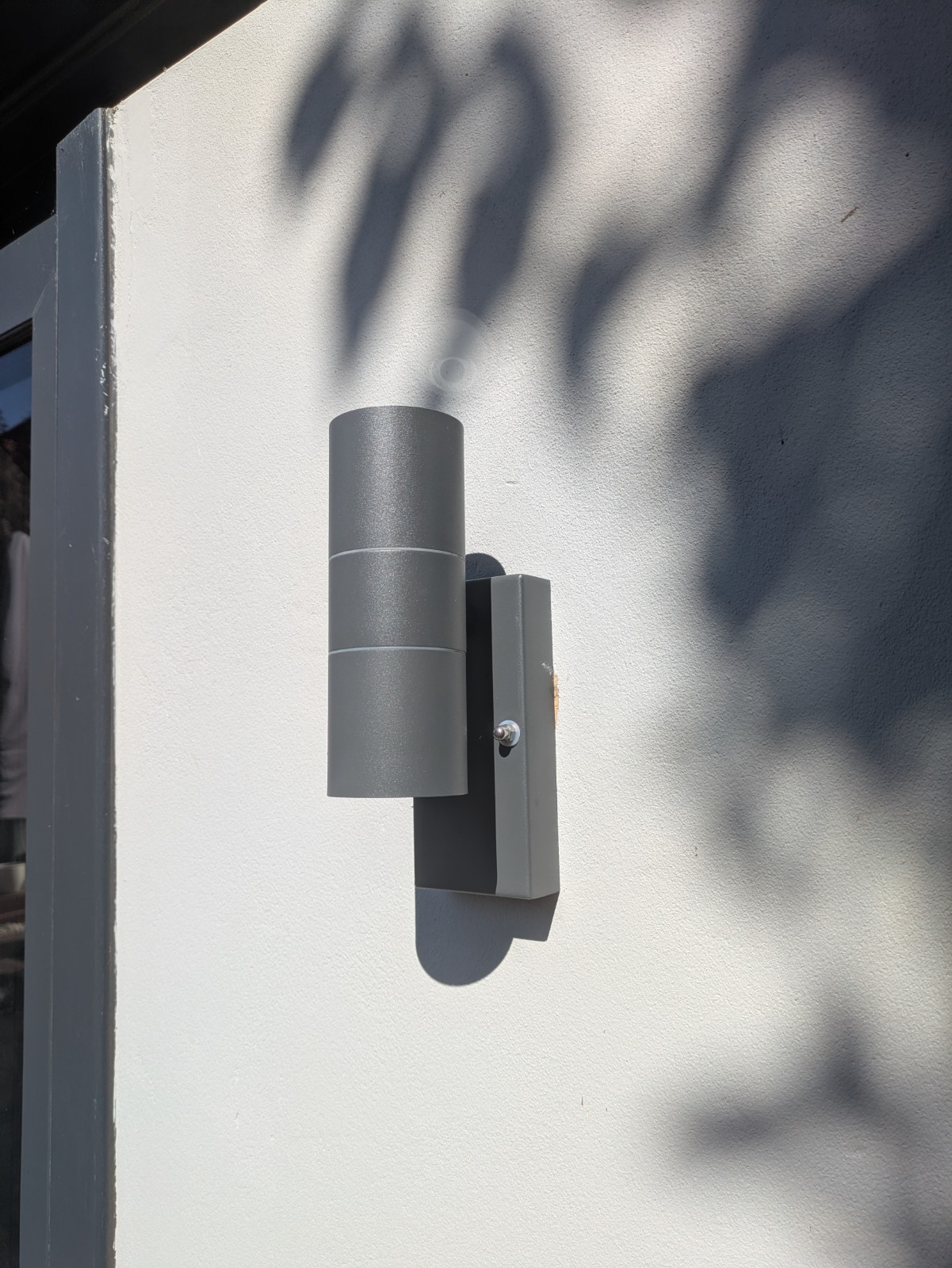
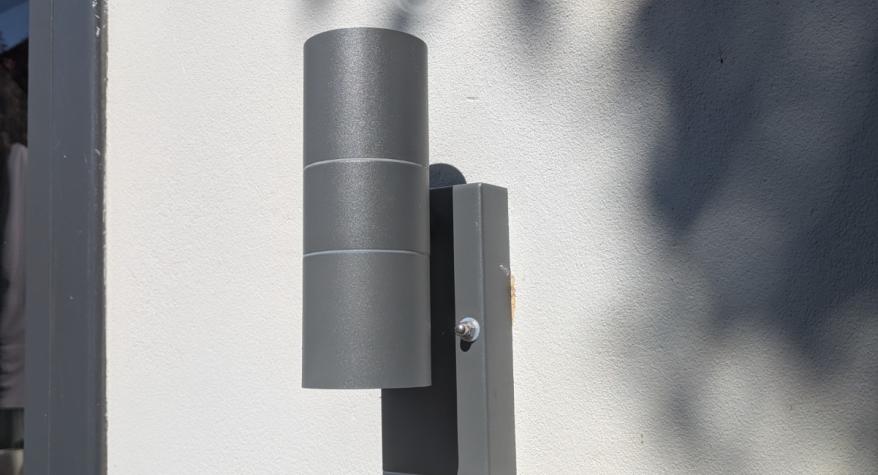
- Installing replacement fittings beside the patio doors
- Completing suitable outdoor cable entries and connections
- Setting the front detection area to cover the driveway
- Setting the front light to remain on for approximately five minutes
How was the front security light set up?
The replacement front light was positioned to cover the driveway.
We adjusted the PIR so it responded within the agreed area and set the operating period to approximately five minutes after detecting movement.
The light was then checked under appropriate conditions to confirm that it responded to movement and switched off after the selected time.
The customer was shown how the controls operated and what to check if the detection range or timing ever needed reviewing.
The replacement avoided the unreliable daytime operation and missed activation associated with the defective original PIR.
How were the rear patio lights checked?
The replacement patio lights were operated through their internal switch.
We checked that both fittings illuminated correctly and that the circuit remained energised without operating the RCD. The accessible connections were inspected before the lights were returned to service.
What was the outcome for the customer?
The customer gained outdoor lighting that operated reliably in the areas where it was needed.
The replacement front light covered the driveway, responded to movement and remained on for approximately five minutes. The two replacement patio lights operated from their internal switch without causing the electrical protection to trip.
The work addressed two different problems. A defective PIR caused the unreliable front lighting, while poor installation and water ingress affected the rear fittings.
Identifying each cause meant the customer received the correct repair for each part of the installation.
Outdoor lighting repairs in Kempshott
If an outdoor light stays on during the day, fails to operate after dark or causes an RCD to trip, the fittings and wiring should be inspected before the fault becomes worse.
Wessex Electrical Services Ltd carries out outdoor-lighting fault finding, repairs and replacements in Kempshott, Basingstoke, Alton and surrounding areas.
Call 01256 957360 to arrange an inspection.