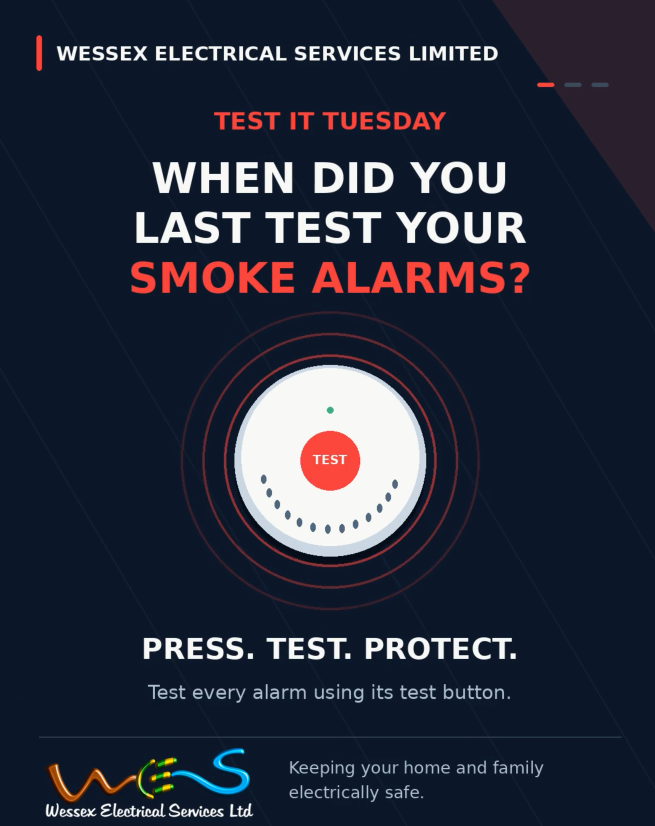
A smoke alarm is easy to forget about. It sits on the ceiling, usually making no noise, while everyone gets on with their day.

Test It Tuesday: When Did You Last Check Your Smoke Alarms?
But when did you last press the test button? And do you know when the alarm needs replacing?
At Wessex Electrical Services Ltd, we encourage homeowners in Alton and the surrounding areas to make alarm checks part of their routine. Test It Tuesday is a simple reminder to give those little devices the attention they deserve.
How often should you test your smoke alarms?
Test every smoke alarm in your home at least once a month, following the manufacturer’s instructions. If your alarm’s instructions specify weekly testing, follow that.
Choosing Tuesday as your regular checking day makes it easier to remember. A weekly reminder is a useful habit, even where the manufacturer specifies a monthly minimum.
You should also test alarms after changing batteries or carrying out maintenance, and when returning home after a lengthy absence. Remember your heat alarms too.
How do you test a smoke alarm properly?
Let everyone in the house know before you start — especially anyone who might be startled by the noise.
Press and hold the alarm’s test button for the time stated in its instructions. A quick tap may not be enough; some models need the button held for around 10 seconds.
You should hear a strong, clear alarm sound. Repeat the process at each alarm. Where alarms are interconnected, check that the other linked units also sound as described in the instructions.
Use the test button, not a candle, match or deliberately produced smoke.
Make sure you can reach the button safely. If that is difficult, ask for help or consider a compatible alarm controller that allows testing from an accessible position.
What should happen when you press the button?
The alarm should follow its normal test sequence. Depending on the model, lights may flash as well as the sounder operating.
Linked alarms may take a few seconds to respond and can continue briefly after you release the button. Check the instructions for your particular system rather than assuming every model behaves identically.
A successful button test is an important routine check. It does not tell you whether you have enough alarms, whether they are correctly positioned, or whether they have reached their replacement date.
When should you change the batteries?
The answer depends on the alarm.
For alarms with conventional replaceable batteries, an annual change is a useful routine, unless the manufacturer specifies a different interval. Replace a battery sooner if the alarm gives a low-battery warning — don’t wait for your annual reminder. Always use the battery type specified for that model.
Sealed long-life batteries are different. They are not designed for you to remove or replace. If a sealed-battery alarm signals a battery fault or reaches the end of its life, follow the manufacturer’s guidance about replacing the unit.
Mains-powered alarms can also contain backup batteries. Some are replaceable; others are sealed rechargeable batteries. Being connected to the mains does not mean an alarm needs no maintenance.
What does an occasional chirp mean?
An intermittent chirp can indicate a low battery, a fault or an alarm reaching the end of its service life. The pattern of beeps and indicator lights varies between models, so check the instructions.
Don’t remove the battery and leave the alarm disabled just to stop the noise. Find the cause and restore working protection promptly.
If an alarm will not sound during testing, follow its troubleshooting instructions. Where a user-replaceable battery is fitted, check or replace it as instructed and test again. If the alarm still fails, arrange prompt replacement or professional help.
If an alarm sounds unexpectedly and you suspect a fire, get out, stay out and call 999. Investigating a fault can wait until everyone is safe.
Do smoke alarms need cleaning?
Yes. Dust and cobwebs can build up around the vents and contribute to unwanted alarms.
Hampshire & Isle of Wight Fire and Rescue Service recommends cleaning smoke alarms every three months. Follow your manufacturer’s method, including any instructions about switching off and restoring the mains supply.
Gently vacuum around the vents using a suitable attachment. Where permitted, wipe the outer casing with a slightly damp cloth and dry it afterwards. Never paint over an alarm or spray cleaning products into it. Test it again after cleaning.
When should the whole alarm be replaced?
Most domestic smoke alarms need replacing after around 10 years, including mains-powered models. Check the manufacturer’s replacement date on the unit.
Changing the battery does not restart the alarm’s lifespan. Replace an expired alarm even if it still makes a noise when you press the button. If you cannot identify its age, ask for advice.
Need help with smoke alarms in Alton?
If you are unsure about your alarms’ age, positioning or operation, Wessex Electrical Services Ltd can help you check what is installed and advise on suitable replacements or improvements.
This Test It Tuesday, take a few minutes to check every alarm. Put the next reminder in your calendar while you’re thinking about it.
Call Wessex Electrical Services Ltd on 01420 384247.
Keeping your home and family electrically safe.