We recently attended a property near London Road in Holybourne where the customer had been getting electric shocks from the kitchen tap. Their RCD main switch also kept tripping, causing loss of power to the whole house.
Electrical Fault Finding Holybourne - Wessex Electrical Services
The fault had been happening since Friday, so the customer had already dealt with several days of shocks and power outages by the time we arrived.
This was not a normal nuisance tripping fault.
When pipework, taps or bonding conductors become live, the situation needs urgent investigation. The cause can sit inside the property, outside the property, or even be linked to a neighbouring installation where buildings share history, services or earthing arrangements.
That is why proper fault finding matters.
What was happening at the Holybourne property?
The customer was experiencing electric shocks from the kitchen tap and repeated loss of power to the whole house.
The RCD main switch kept tripping. That made the problem disruptive because one fault affected the whole property rather than one individual circuit.
The customer had also noticed shocks from the kitchen tap. That information changed the nature of the visit straight away.
A tripping RCD can have many causes. A shock from metal pipework or a tap suggests a more serious issue that needs careful investigation.
At this property, our initial checks found that the bonding conductors were live.
That meant we needed to work through the fault methodically and consider whether the problem was coming from the customer’s installation, the supply, or somewhere connected nearby.
Why are electric shocks from a tap serious?
Electric shocks from a tap are serious because taps and pipework should not become live.
Main protective bonding is there to help reduce dangerous voltage differences between metal services and the electrical installation. If bonding conductors are live, something is wrong and the source needs to be found.
This is not something a homeowner should try to investigate by touching pipework, resetting switches repeatedly, or removing covers.
The right approach is to stop, make the situation safe where possible, and arrange urgent electrical investigation.
In this case, the customer had already experienced shocks and power loss since Friday. That made it important to establish where the voltage was coming from before any assumptions were made.
What did Wessex Electrical Services check first?
We started by checking the installation and testing what was present.
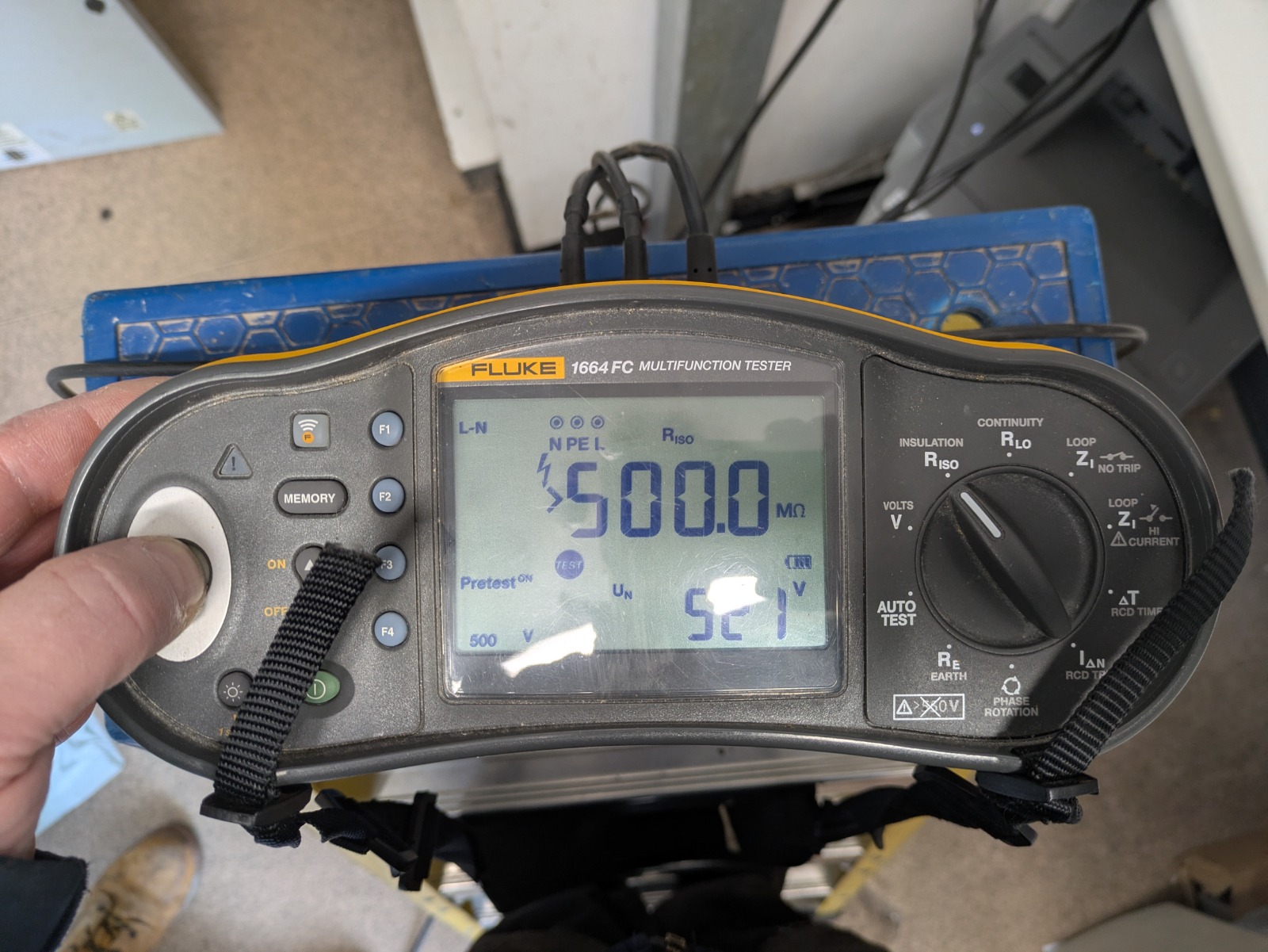
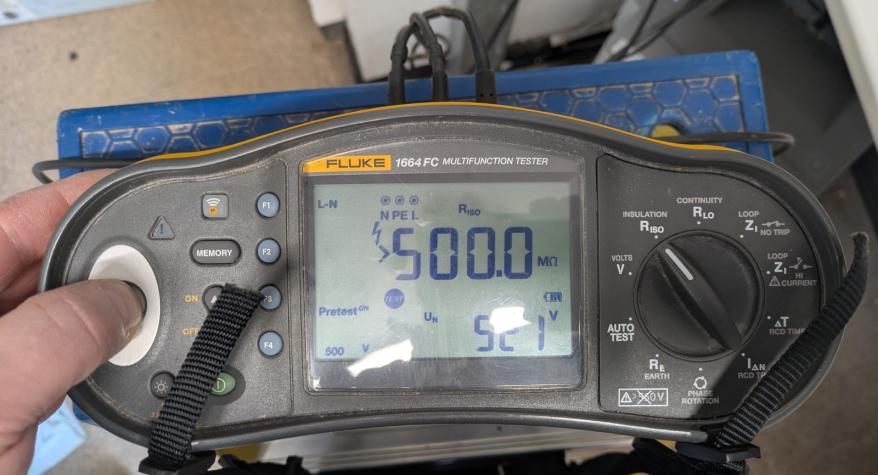
During the initial checks, we found the bonding conductors were live. We also found around 380 V between live and earth during testing.
That reading was a major concern.
The fault appeared to involve more than a standard single-circuit issue. We appeared to have two phases present at the board, which raised the possibility of a supply-side fault or an issue involving neighbouring properties.
At that point, the priority was to follow the evidence and avoid guessing.
Why did we contact SSEN?
We contacted SSEN because the readings and symptoms raised concern about a possible supply issue.
The customer’s property was supplied by overhead lines, so we dialled 105 and arranged for SSEN to attend. They inspected the overhead lines for a possible cable rub-through issue and cut back trees around the lines.
No fault was found on the overhead supply.
That was an important part of the fault-finding process. It helped rule out one possible cause and allowed the investigation to continue in the right direction.
Electrical fault finding often works this way. Each check either confirms a fault or removes a possible cause.
Why did we check the neighbouring properties?
We checked the neighbouring properties because the building had originally been one larger house that had been split into three separate homes.
That detail mattered.
Where one building has been divided into separate properties, the electrical arrangements can be more complex. Supplies, bonding, earthing and building services may have a shared history, even if the homes now operate separately.
In this case, each property was on a different phase.
After SSEN found no overhead supply fault, we continued the investigation and went to the neighbouring properties.
That was where the cause became clearer.
What did we find in the neighbouring property?
In one of the neighbouring properties, there was a circuit that kept tripping.
We found that the RCD protection had been bypassed, but the circuit fault had not been properly resolved. The circuit still had a live-to-earth fault.
When that faulty circuit was energised, it made bonding conductors live in the other properties.
Because the separate properties were on different phases, this explained why we were seeing around 380 V during testing.
This was a serious fault. It also showed why the issue could not be solved by focusing only on the first customer’s consumer unit.
The symptom appeared in one property, but the source of the problem was in another.
Why was the fault so difficult to trace?
The fault was difficult to trace because the symptoms crossed property boundaries.
From the first customer’s point of view, they had shocks from a kitchen tap and whole-house power loss. It would be easy to assume the fault was inside their own home.
The test results suggested a wider issue.
The property’s history also mattered. A single larger house had been split into three separate homes, each on a different phase. That created a situation where a fault in one property could affect bonding conductors elsewhere.
This is where practical site judgement becomes as important as the test readings.
The readings told us something was seriously wrong. The building history helped us understand where else to look.
What did Wessex Electrical Services do?
Once the faulty circuit in the neighbouring property was identified, we disconnected that circuit.
We then advised that the neighbour should arrange for someone competent to repair the fault properly.
That was the correct outcome for the situation. The dangerous circuit needed to be taken out of service, and the underlying fault needed proper investigation and repair by a competent electrician.
The final result was that the source of the dangerous condition was identified and the faulty neighbouring circuit was disconnected.
What makes this situation worse, is that the bypassing of the RCD was done by an electrician??
Why bypassing RCD protection is dangerous
Bypassing RCD protection can leave a serious fault in service.
If an RCD keeps tripping, it is operating for a reason. Bypassing it may stop the tripping symptom, but it does not remove the fault.
In this Holybourne case, the neighbouring circuit had a live-to-earth fault & not a neutral to earth fault as the other electrician had thought. When that circuit was energised, the fault affected bonding conductors in the other properties.
That is why nuisance tripping should be investigated rather than worked around.
Protective devices are there to disconnect dangerous faults. If they operate repeatedly, the answer is to find the fault, not defeat the protection.
What should you do if you get a shock from taps or pipework?
If you feel a shock from a tap, pipework or any metal part of the property, stop using it and arrange urgent help.
- Do not keep touching it to check whether the shock is still there.
- Do not repeatedly reset the RCD or main switch.
- Do not remove electrical covers or try to test the installation yourself.
If you suspect an issue with the incoming supply, call 105 to contact the local electricity network operator. You should also arrange for a competent electrician to check the installation.
Shocks from pipework, live bonding conductors and repeated power loss should be treated seriously.
Electrical fault finding in Holybourne
Wessex Electrical Services carries out electrical fault finding for homeowners and businesses in Holybourne, Alton and the surrounding Hampshire area.
We investigate faults involving RCDs, RCBOs, tripping circuits, live bonding conductors, lighting faults, socket faults, outside electrics and unexplained loss of power.
This Holybourne fault near London Road shows why testing and practical investigation matter. The problem appeared at one property, but the cause was traced to a neighbouring circuit in a building that had once been one larger house.
Electrical faults are not always where they first appear.
FAQs: Electrical Fault Finding in Holybourne
Why would I get a shock from a kitchen tap?
A shock from a kitchen tap can happen when metal pipework or bonding conductors become live due to an electrical fault. This needs urgent investigation.
Should I keep resetting the RCD if it keeps tripping?
No. If an RCD keeps tripping, the fault should be investigated. Repeated resetting does not fix the problem.
Can a fault in a neighbour’s property affect mine?
In some situations, yes. This is more likely where buildings have shared history, linked services or complex supply arrangements. Proper testing is needed to confirm the cause.
Why did Wessex Electrical Services contact SSEN?
SSEN were contacted because the test results and symptoms raised concern about a possible supply-side fault involving the overhead lines.
What does 105 do?
105 connects you to the local electricity network operator for power cuts and possible supply network issues.
Do you carry out electrical fault finding in Holybourne?
Yes. Wessex Electrical Services carries out electrical fault finding in Holybourne, Alton and the surrounding Hampshire area.
Speak to Wessex Electrical Services
If you are getting shocks from taps, pipework or metalwork, or your RCD keeps tripping, arrange urgent electrical fault finding.
Wessex Electrical Services can inspect, test and investigate the fault before recommending the next step.
For electrical fault finding in Holybourne, Alton and the surrounding area, call Wessex Electrical Services Ltd on 01420 384247.