Good commercial lighting changes how a space feels, how safely people can move through it, and how practical the area becomes for day-to-day work.
Commercial LED Lighting Installation Alton | Mezzanine Lighting
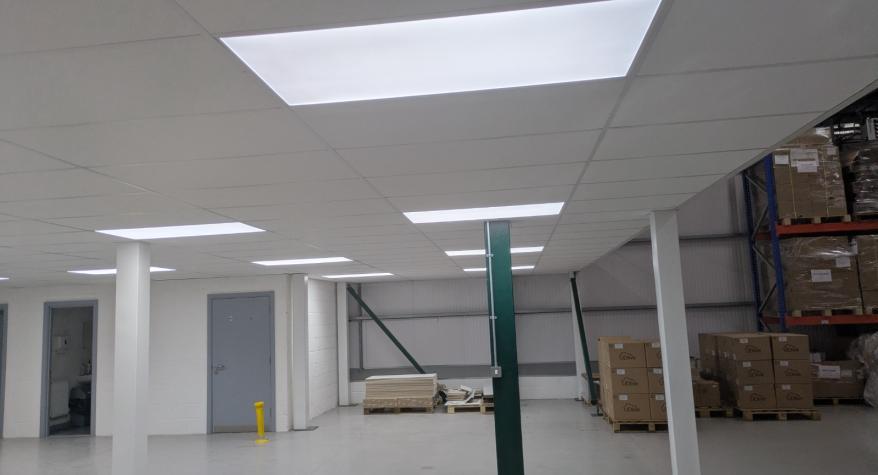
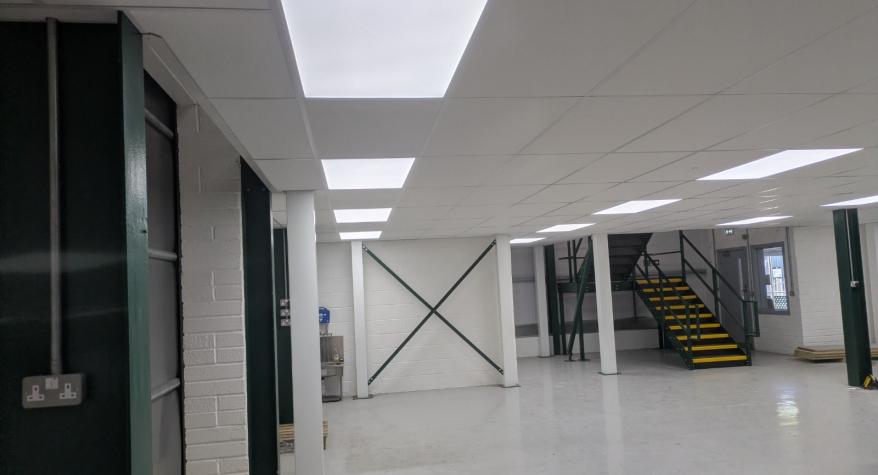
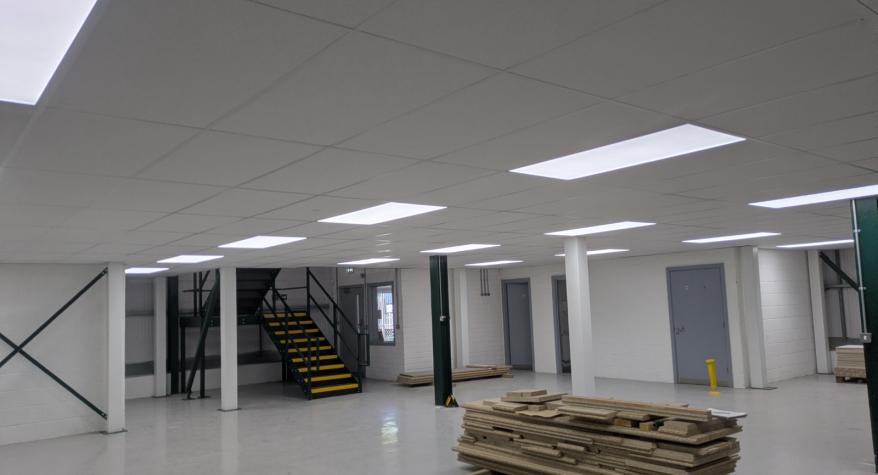
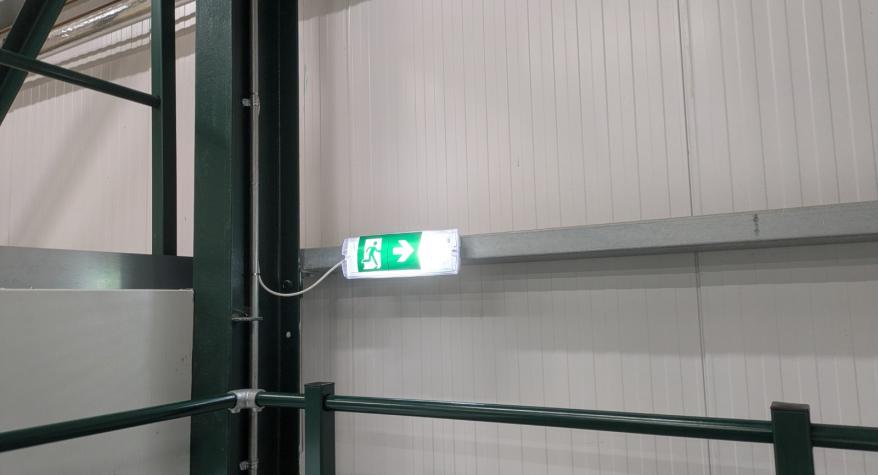
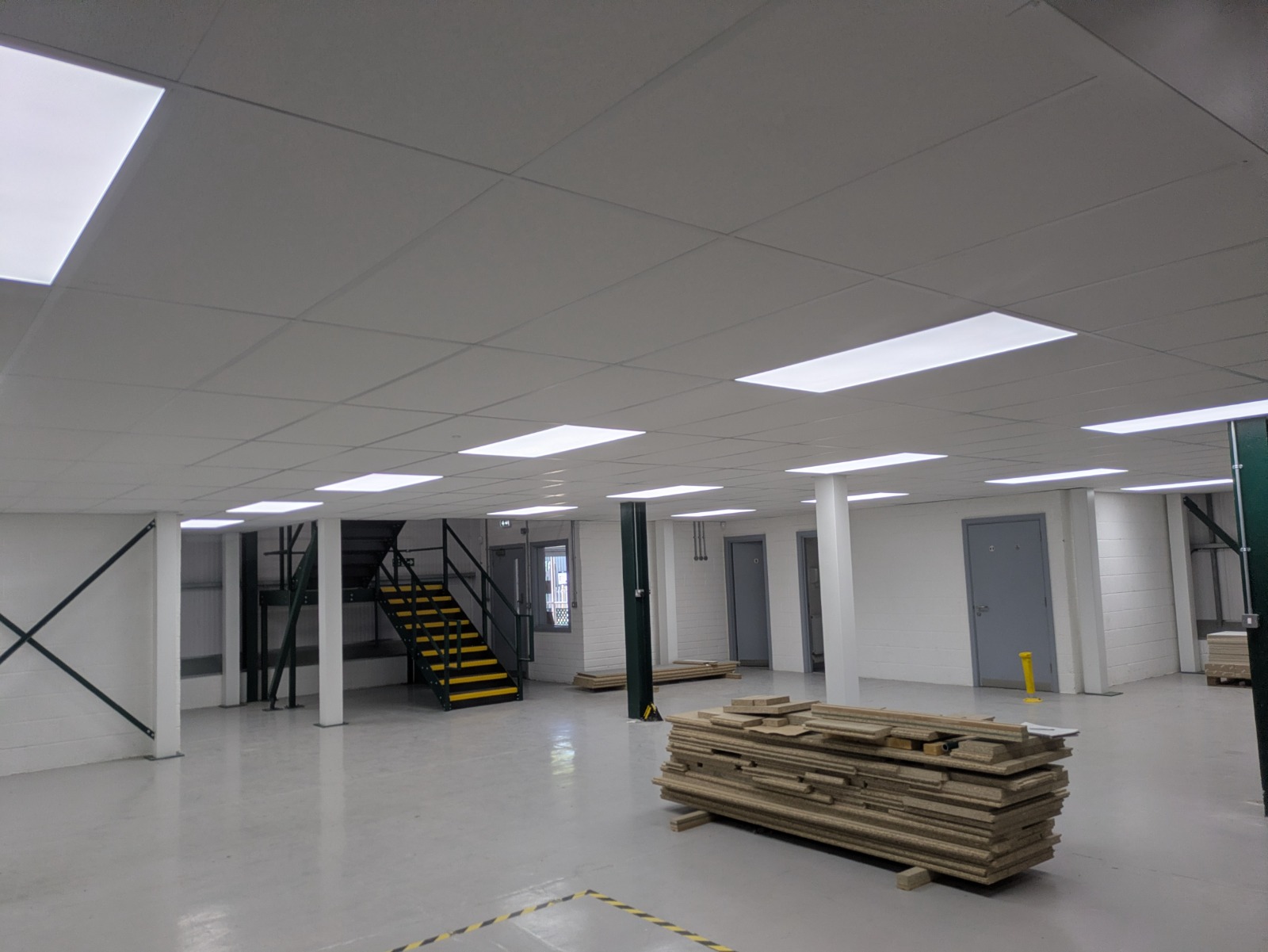
We recently completed a commercial LED lighting installation for a repeat customer in Alton. The work was carried out below a mezzanine floor, where the customer needed dependable lighting across the area beneath the structure.
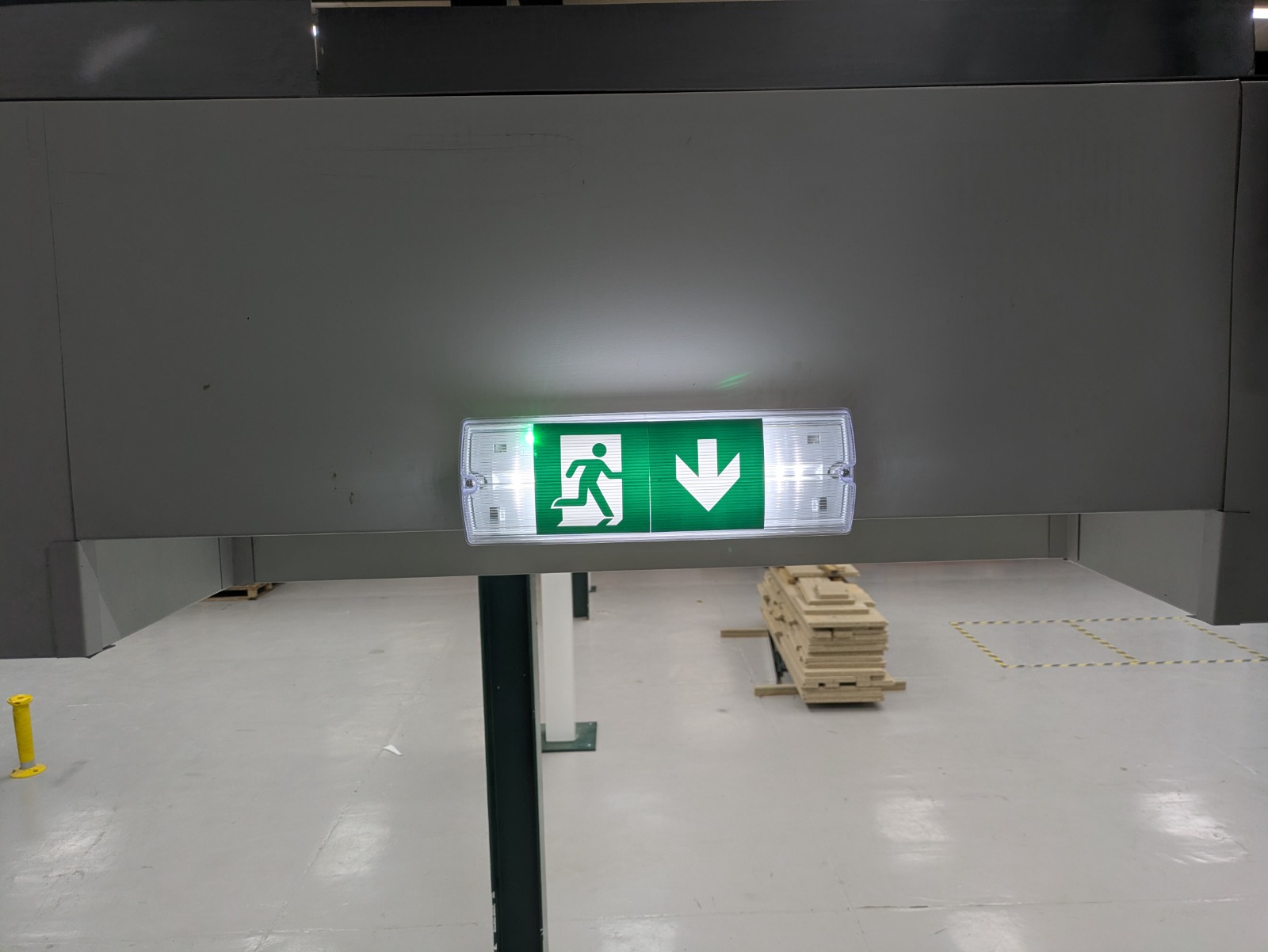
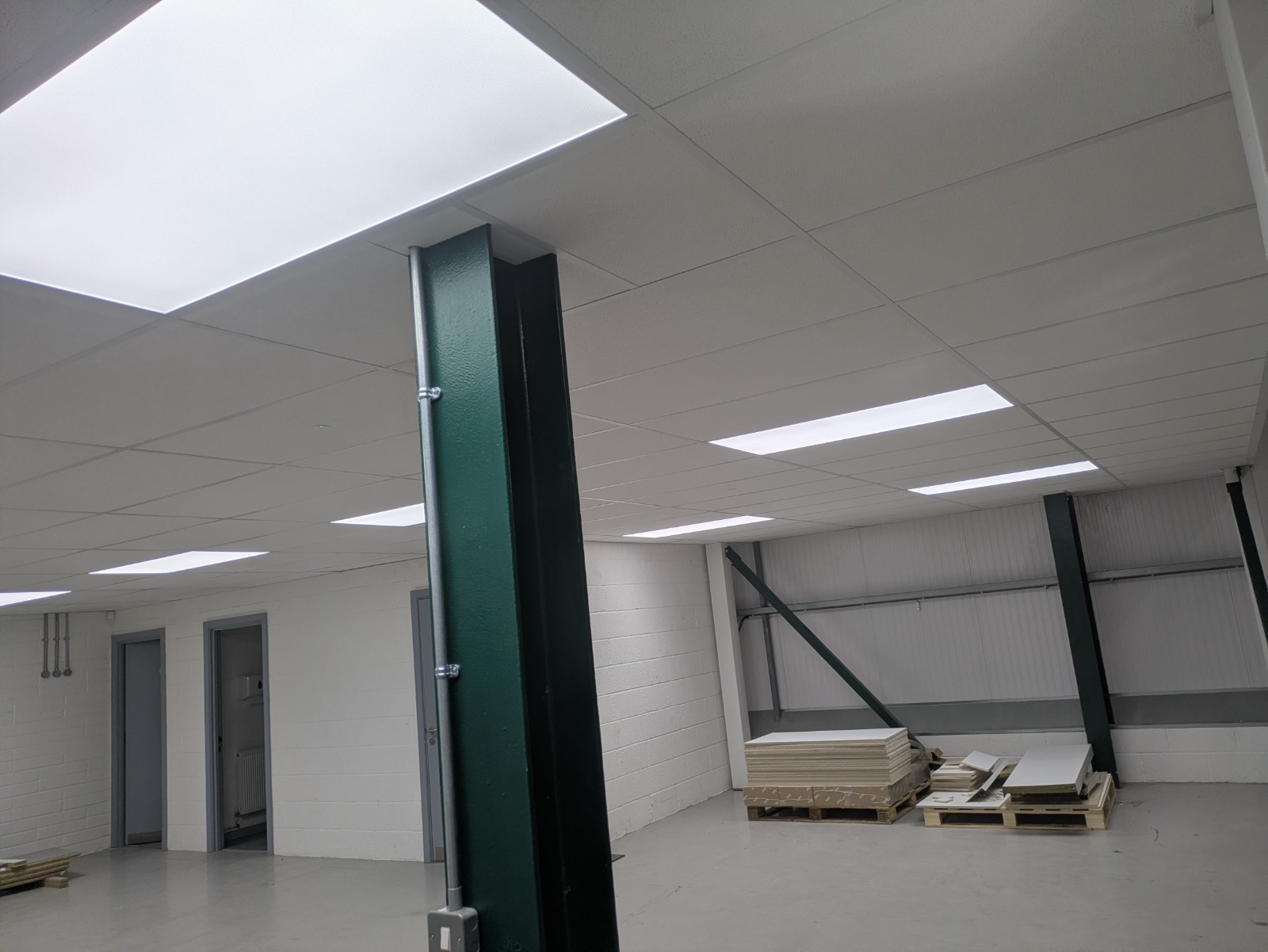
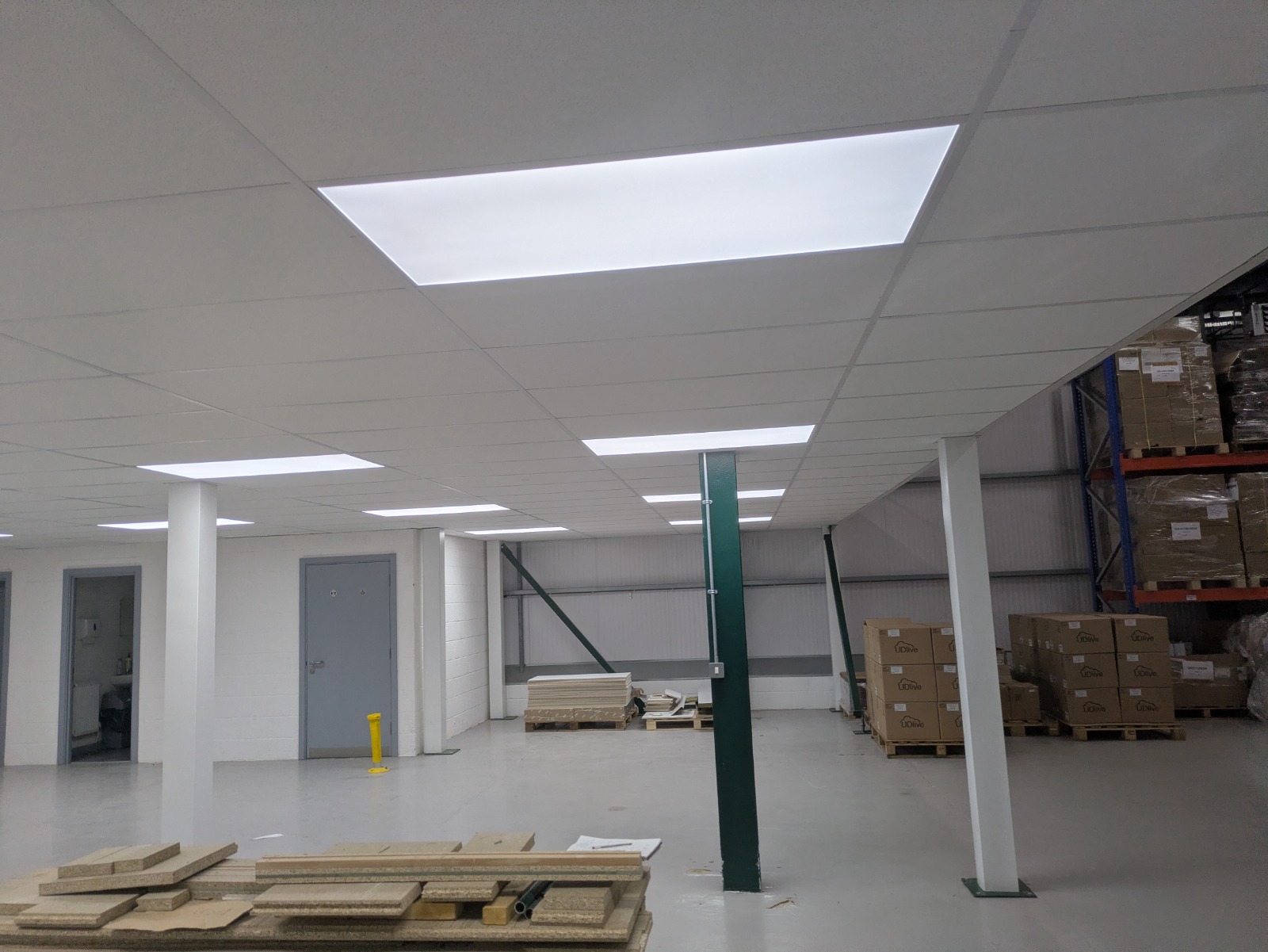
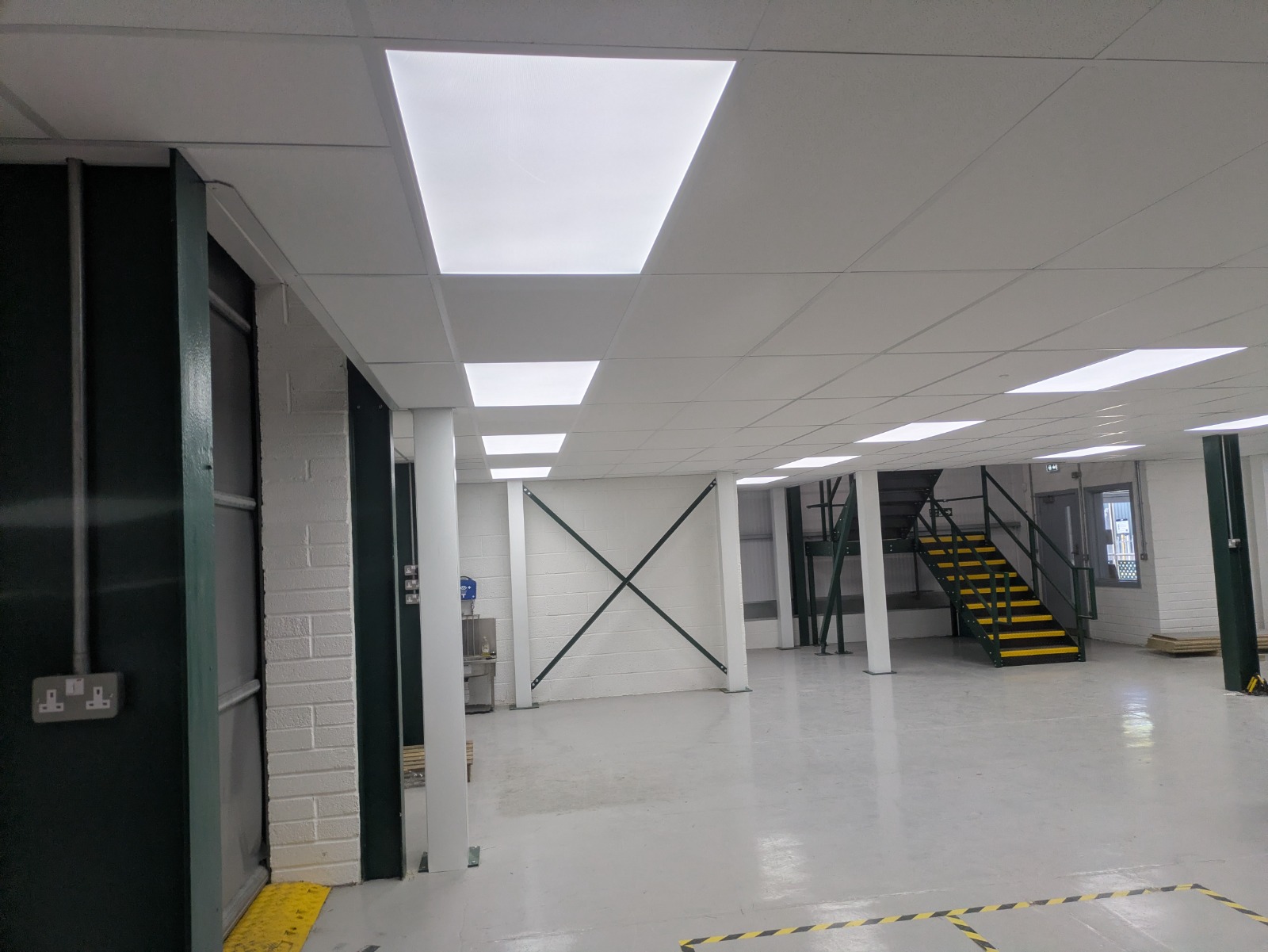
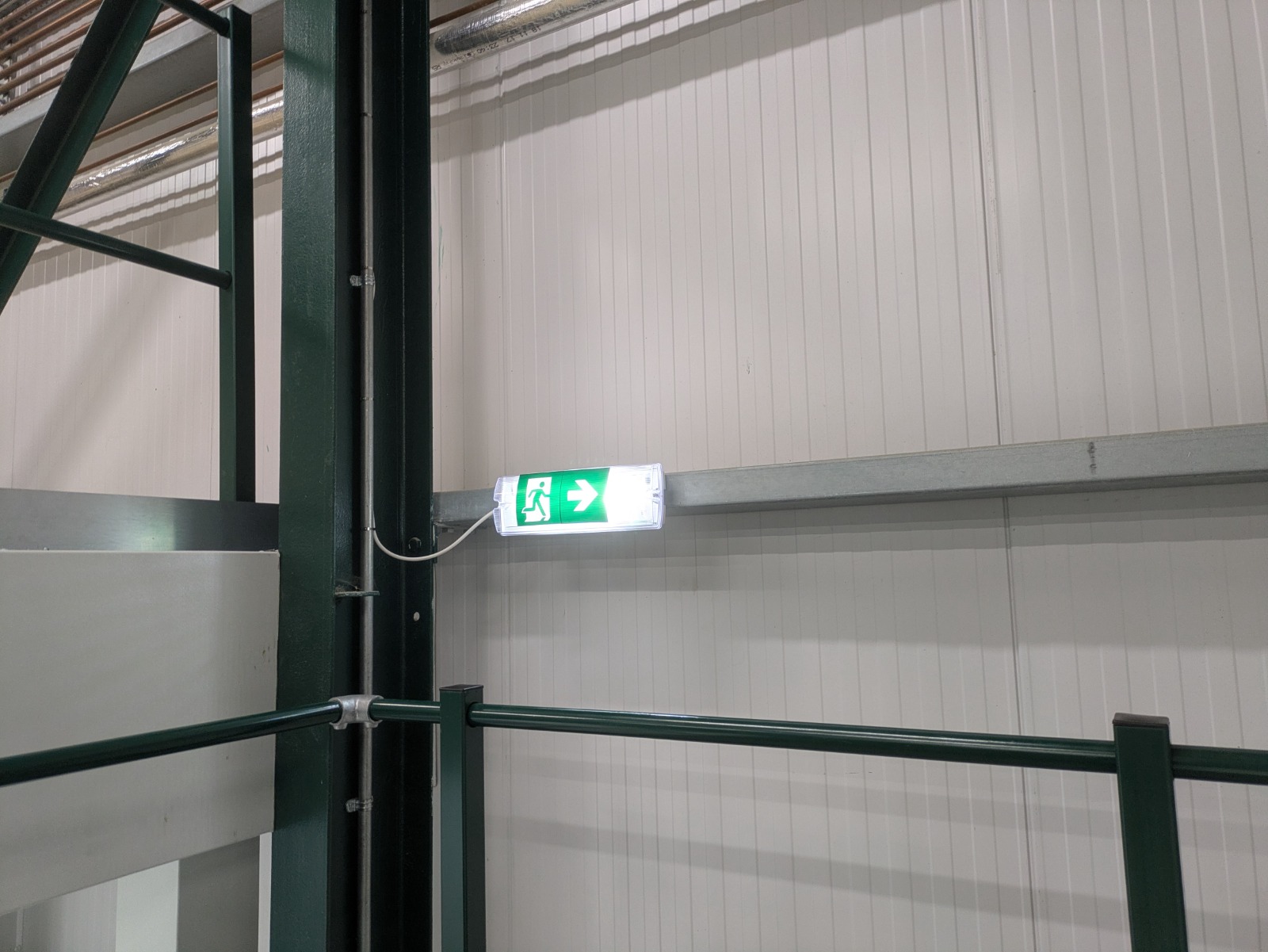
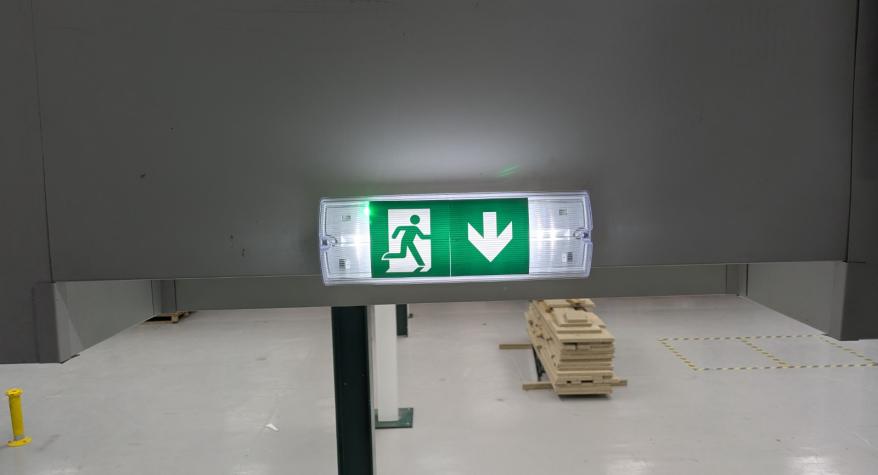
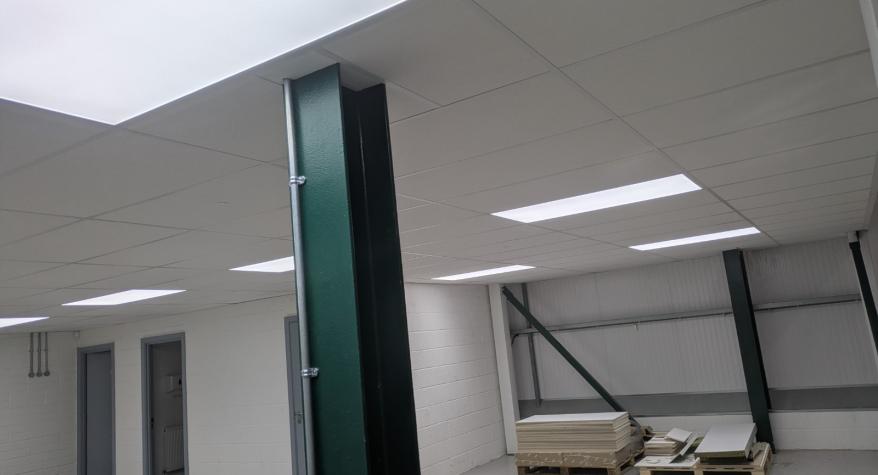
The installation included 1200 x 600 anti-glare LED panels, 1W emergency spotlights and rectangular bulkheads. The wiring was installed on cable tray using FP200 cable, fixed with stainless steel cable ties.
The finished lighting transformed the space. The area below the mezzanine became brighter, easier to use and more professional in appearance.
Why does lighting below a mezzanine need careful planning?
Lighting below a mezzanine needs careful planning because the structure affects the layout, mounting positions, cable routes and final light spread.
A mezzanine creates a covered area within a larger commercial space. That can make the space underneath feel darker than the surrounding area, especially where natural light is limited or existing fittings do not reach far enough.
The underside of the mezzanine also introduces practical constraints. Steelwork, deck supports, access routes, existing services and the intended use of the area all affect where fittings can be positioned.
On this Alton project, the lighting layout had to work with the available structure. The aim was to provide useful light across the working area while keeping the installation tidy and accessible.
What did the customer need from the lighting?
The customer needed a reliable lighting installation that made the space below the mezzanine more usable.
Poor lighting can make a commercial area feel unfinished. It can also create shadows, awkward working conditions and a less comfortable environment for people using the space.
Below a mezzanine, a few poorly placed fittings can leave dark patches. Too much brightness in the wrong position can create glare. A neat layout matters as much as the fittings selected.
For this job, the main requirement was clear general lighting with emergency fittings incorporated into the design. The customer also needed the visible wiring route to look professional, because the installation would remain exposed below the mezzanine.
Why use 1200 x 600 anti-glare LED panels?
1200 x 600 anti-glare LED panels were used to provide broad, even lighting across the area.
Large LED panels suit this type of installation because they spread light across a wider surface. That helps reduce harsh patches of brightness and gives the space a cleaner finish.
Anti-glare fittings were selected because people may be working, walking or looking across the area beneath the mezzanine. Glare can make a well-lit space uncomfortable, especially over longer periods.
Lighting is not only about brightness. The position of the fittings, the spread of light and the comfort of the people using the area all matter.
On this project, the LED panels gave the area a brighter and more even appearance without making the space feel harsh.
Why include emergency spotlights and bulkheads?
Emergency spotlights and bulkheads were included because commercial lighting often needs more than general illumination.
The 1W emergency spotlights formed part of the emergency lighting arrangement for the area. These compact fittings allowed emergency lighting to be included without making the installation look cluttered.
Rectangular bulkheads were also installed in selected positions. Bulkheads are useful where a robust fitting is needed and where the lighting layout requires more than panels alone.
Emergency lighting should be considered while planning the general lighting layout. Fitting position, escape routes, changes in level, doorway locations and how people move through the premises can all affect the final arrangement.
For this Alton installation, the emergency fittings and bulkheads were planned as part of the wider lighting upgrade rather than treated as separate add-ons.
Why was cable tray used?
Cable tray was used to provide a neat, supported route for the lighting wiring below the mezzanine.
In a commercial environment, visible wiring needs to be organised. The finished installation should look deliberate, not untidy or temporary.
Cable tray helps support the wiring and provides a clear route along the structure. It also makes future inspection and maintenance easier because the cable routes are visible and accessible.
On this job, the lighting wiring was installed using FP200 cable fixed to the tray with stainless steel cable ties.
That gave the installation a tidy surface-mounted route and avoided loose or poorly supported wiring below the mezzanine.
Why does cable support matter in commercial lighting?
Cable support matters because commercial installations often remain visible and may need to be inspected, altered or maintained later.
Good support also helps protect the installation from damage, sagging and poor presentation.
Straight cable routes, suitable containment and consistent fixing make a visible installation look professional. They also help anyone working on the system in the future understand how the wiring has been installed.
Below a mezzanine, the wiring is often part of what people see when they look up. If the tray, fixings and cable routes are untidy, the whole job can look unfinished even when the lights work well.
For this installation, the combination of cable tray, FP200 cable and stainless steel cable ties gave the work a clean and robust finish.
What changed once the lights were installed?
The lighting transformed the space below the mezzanine.
The LED panels gave the area a bright, even spread of light. The anti-glare design made the lighting more comfortable for people using the space. The emergency spotlights and rectangular bulkheads were incorporated into the layout, and the cable tray gave the wiring a neat commercial finish.
The result was a space that looked more complete and worked better for the customer.
That is often the difference with commercial lighting. The fittings themselves matter, but the layout, containment, cable routes and practical use of the area decide whether the final installation works well.
What should businesses consider before upgrading commercial lighting?
Before upgrading commercial lighting, businesses should consider how the area is used and what the existing lighting fails to do.
A workshop, warehouse, office, stock area or mezzanine space will each need a different approach.
The right questions include:
- How will people use the space?
- Where do they walk, stand or work?
- Are there shadows or dark areas?
- Is glare a problem?
- Are emergency fittings required?
- Can the wiring be routed neatly?
- Will the installation need future maintenance or changes?
These questions help shape the design before fittings are ordered.
The cheapest fitting or highest lumen output does not always produce the best result. A better lighting installation comes from matching the design to the space.
Commercial LED lighting installation in Alton
Wessex Electrical Services carries out commercial LED lighting installations and upgrades for businesses in Alton and the surrounding Hampshire area.
We can help with lighting layouts, LED upgrades, emergency lighting, containment, cable tray, bulkheads, panel lighting and lighting fault finding.
For this repeat customer in Alton, the project involved lighting below a mezzanine using anti-glare LED panels, emergency spotlights, rectangular bulkheads, FP200 cable and stainless steel fixings.
The finished result improved the area and gave the customer a brighter, more practical commercial space.
FAQs
Why choose LED lighting for a commercial space?
LED lighting can improve brightness, reduce maintenance compared with older fittings and provide a cleaner, more consistent light across the working area.
Are anti-glare LED panels useful below a mezzanine?
Yes. Anti-glare LED panels can make the space below a mezzanine more comfortable by reducing harsh brightness while still providing useful general lighting.
Can emergency lighting be included in a commercial lighting upgrade?
Yes. Emergency lighting can be planned as part of the wider lighting installation, including suitable positions for emergency spotlights or bulkheads.
Why use cable tray for commercial lighting wiring?
Cable tray gives the wiring a supported and organised route. It also helps keep visible commercial wiring neat and easier to inspect or maintain.
Do you install lighting below mezzanine floors?
Yes. Wessex Electrical Services can install lighting below mezzanines, including LED panels, bulkheads, emergency fittings, containment and cabling.
Do you carry out commercial lighting work in Alton?
Yes. Wessex Electrical Services carries out commercial lighting installations and upgrades in Alton and surrounding the areas of Hampshire.
Speak to Wessex Electrical Services
Speak to Wessex Electrical Services, if you have a workshop, warehouse, office, commercial unit or mezzanine area that needs better lighting, Wessex Electrical Services can help plan and install a practical solution.
We can assess the space, discuss how the area is used, advise on fitting types and complete the installation neatly.
For commercial LED lighting installation in Alton and the surrounding area, call Wessex Electrical Services Ltd on 01420 384247 or email us via our online contact form.