Discovering that your plug sockets have stopped working can be confusing, particularly when the lights and other parts of the property continue operating normally.
The problem may affect one socket, one room or an entire circuit. In some cases, the cause is a tripped protective device or faulty appliance. In others, it may be a loose connection, damaged cable or break in the circuit.
For homeowners in Odiham, a loss of power to sockets should be investigated rather than worked around with extension leads.
Why can the lights still work when the sockets do not?
Lighting circuits and socket circuits are normally protected separately.
This means a fault on the socket circuit may disconnect the sockets while leaving the lights unaffected. Similarly, an upstairs socket circuit may remain operational while the downstairs sockets have lost power.
Modern consumer units often divide the installation across several protective devices. This helps limit the part of the property affected by a single fault.
Check the consumer unit
The first thing to check is whether an MCB, RCD or RCBO has operated.
Homeowners may refer to these as:
- The trip switch
- The breaker
- The fuse switch
- The RCD
- The fuse-box switch
A breaker may have operated because of:
- A faulty appliance
- A short circuit
- An overloaded circuit
- Damaged wiring
- Earth leakage
- Moisture
- A defective socket
- A fault in outdoor equipment
If there are no signs of heat, smoke, burning or damage, unplug appliances from the affected sockets and attempt one reset.
If the breaker trips again, leave it switched off.
Why would only one socket stop working?
A single dead socket may be caused by:
- A loose terminal
- A damaged accessory
- A broken conductor
- A failed switched socket
- Heat damage
- A fault in a spur connection
- A damaged cable behind the socket
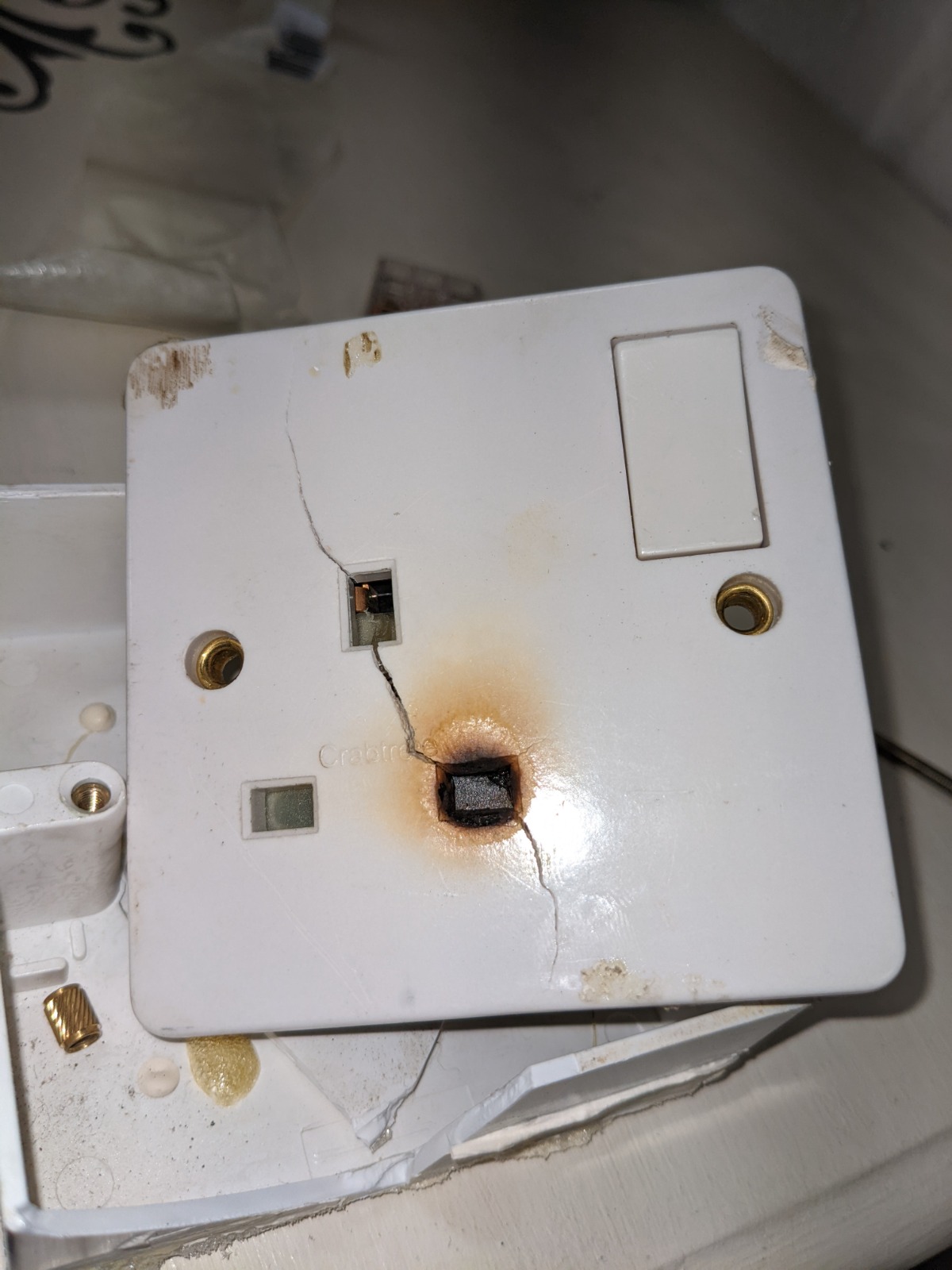
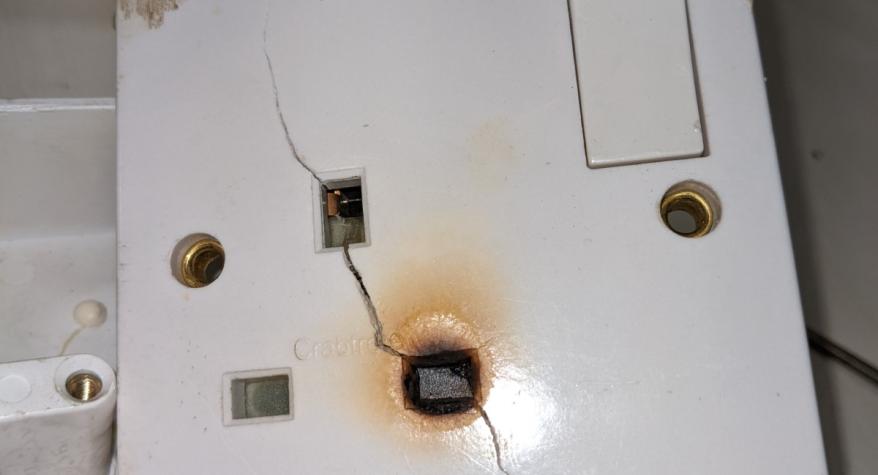
A socket can appear normal from the front while having loose or burnt connections behind it.
If one socket is not working but others are, avoid assuming the issue is harmless. A loose connection can create heat and arcing.
Why would several sockets stop working?
If a group of sockets loses power, possible causes include:
- A tripped protective device
- A break in a ring final circuit
- A failed fused connection unit
- A disconnected cable
- A burnt connection
- Damage caused by building work
- A fault on an extension to the original circuit
- Water entering an outdoor accessory
In some installations, a group of sockets may be supplied through a fused spur. If that fused connection unit fails or its fuse operates, everything downstream may stop working.
Could an appliance be responsible?
Yes. A faulty appliance can trip the circuit and make it appear that the sockets themselves have failed.
Common causes include:
- Kettles
- Washing machines
- Dishwashers
- Tumble dryers
- Toasters
- Fridges
- Freezers
- Portable heaters
- Extension leads
- Outdoor tools
Unplugging appliances can sometimes help identify the source.
However, do not keep reconnecting an appliance that repeatedly causes the circuit to trip.
Warning signs around sockets
Arrange professional help promptly if you notice:
- Scorching
- Discolouration
- Melting
- Heat
- Buzzing
- Crackling
- A burning smell
- Loose faceplates
- Sparks
- Intermittent power
These symptoms may indicate a loose or overheated connection.
A circuit breaker does not always operate when a connection is overheating, because the current may remain below the breaker’s rating.
Why extension leads are not a proper solution
When sockets fail, it can be tempting to run extension leads from another room.
This may create additional problems, especially if the extension lead is:
- Overloaded
- Run beneath carpets
- Trailing across doorways
- Connected to high-powered appliances
- Daisy-chained with other extensions
- Used outdoors without suitable protection
The correct solution is to find and repair the electrical fault.
How will the fault be investigated?
Electrical fault finding may involve:
- Testing the protective device
- Checking the affected circuit
- Inspecting sockets and fused spurs
- Testing circuit continuity
- Checking for insulation damage
- Tracing cable routes
- Separating sections of the circuit
- Testing connected equipment
- Inspecting outdoor accessories
- Checking ring continuity
The electrician should identify why the power was lost rather than simply replacing the first socket encountered.
Socket fault finding in Odiham
Wessex Electrical Services Ltd provides socket repairs and electrical fault finding throughout Odiham.
We can help when:
- One socket has stopped working
- Several sockets are dead
- A breaker keeps tripping
- Sockets work intermittently
- A socket feels hot
- Outdoor sockets cause faults
- A circuit has lost continuity
- A damaged socket needs replacing
Once the fault is located, we explain what has happened and advise on the appropriate repair.
We are NAPIT Registered, Which? Trusted Trader approved, Trading Standards Approved and TrustMark endorsed.
If the sockets in your Odiham property have stopped working, contact Wessex Electrical Services Ltd for professional testing and repair.
Call 01256 957360