Some electrical jobs are less about fitting something new and more about keeping a project moving safely.
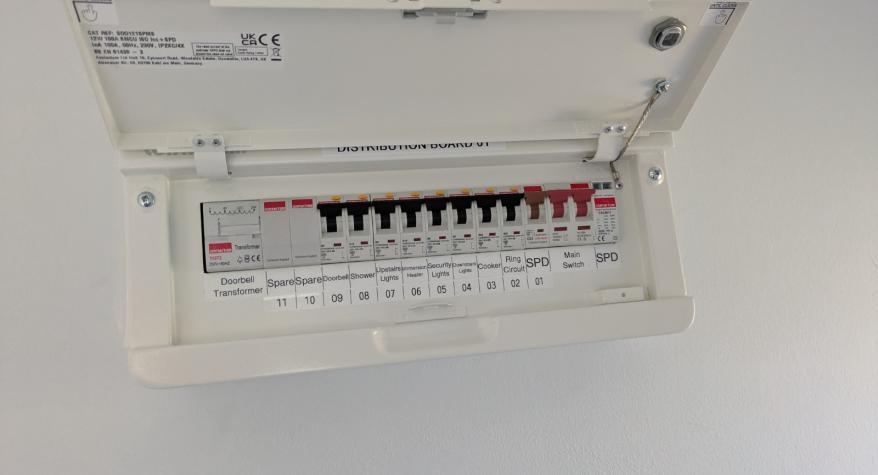
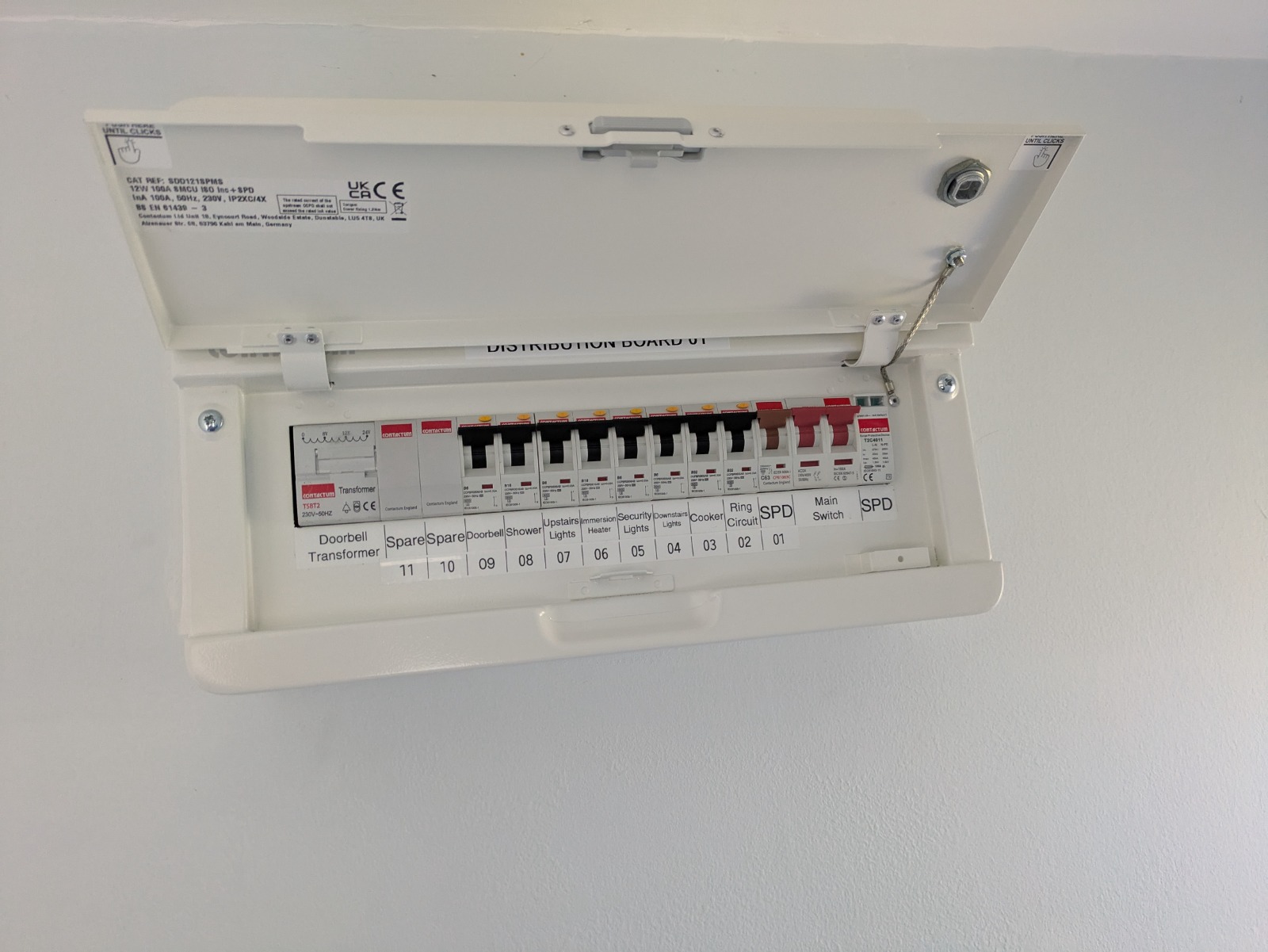
We recently carried out electrical work at a 1960s-style bungalow conversion near High Street in Medstead. The property was being converted, and a full rewire was planned for a later stage of the project.
The customer needed the existing circuits removed from the old fuse board at one end of the property, joined, and reconnected at the other end of the property on the same day that the supply was disconnected and the new supply was made live.
That type of work needs planning. The installation was temporary, but it still needed to be safe, tested and suitable for the stage of the project.
Why was temporary electrical work needed?
Temporary electrical work was needed because the bungalow conversion was being carried out in stages.
During building projects, the electrical installation often has to move before the final layout is ready. In this case, the existing fuse board position no longer suited the work taking place, but the full rewire was not being completed that day.
The customer needed power restored to the existing circuits after the supply change, without treating the arrangement as a finished long-term installation.
That matters because temporary work still needs proper testing. It should not be bodged together to get through the day.
What did the customer need on the day?
The customer needed the existing circuits disconnected from the old fuse board, extended or joined where required, and reconnected at the new position once the supply was made live.
The timing was important. The work had to be completed on the day of the supply change so the property was not left without a working electrical installation.
On projects like this, coordination matters. The supply disconnection, new supply connection, existing circuit work and testing all need to be thought through before the day starts.
A rushed approach can leave circuits unidentified, untested or poorly connected.
What did we find during the inspection?
During the inspection, we found several joint boxes in the loft.
That is common in properties that have been altered over time, especially where previous changes have been made to lighting, sockets or heating controls.
Joint boxes are not automatically a problem, but they need to be considered. Their condition, accessibility, wiring method and purpose all matter.
In a bungalow conversion, the loft is often a key area for cable routes. Finding several joint boxes meant the existing circuits needed careful checking before being reconnected.
Why does testing matter before reconnecting existing circuits?
Testing matters because existing circuits should be checked before being connected to a new supply arrangement.
Where circuits have been altered, moved or reconnected, the electrician needs to confirm that the conductors are continuous, insulation resistance is acceptable, earth fault loop impedance readings are suitable, and the protective devices operate correctly.
On this Medstead job, we carried out continuity testing, insulation resistance testing, earth loop impedance testing and RCBO trip time testing.
Those checks helped confirm that the temporary arrangement could be left working for that stage of the project.
Why were RCBO trip times tested?
RCBO trip times were tested to confirm that the protective devices operated correctly.
An RCBO provides overcurrent protection and residual current protection for an individual circuit. In practical terms, it helps reduce the effect of a fault because each circuit has its own protection.
Testing the trip times confirms that the device disconnects within the expected time under test conditions.
For a temporary installation during a conversion, this is still important. The fact that a full rewire is planned later does not remove the need for the existing circuits to be tested when they are reconnected.
What is different about working on a conversion?
Electrical work during a conversion needs more planning because the finished layout is often still changing.
Rooms may be opened up, walls altered, ceilings changed, and services moved. Existing circuits may remain in use for a while, even though they will be replaced during the final rewire.
That creates a middle stage. The installation is not in its final form, but the customer still needs power, lighting and safe operation while the project continues.
At this 1960s-style bungalow near High Street in Medstead, the key point was that the existing circuits were being kept in service temporarily until the full rewire could take place.
Why not complete the full rewire straight away?
The full rewire was linked to the wider bungalow conversion and was planned for a later stage.
That can make sense on building projects. The best time to rewire is often when the layout, access routes, ceiling voids, wall positions and final electrical requirements are clear.
Carrying out the full rewire too early can create extra changes later if the building work moves on or the design changes.
For this job, the immediate requirement was to make the existing circuits work safely from the new position. The full rewire would follow when the project was ready.
What should homeowners think about during a bungalow conversion?
Homeowners should think about the electrical plan early during a bungalow conversion.
That includes where the consumer unit will go, how existing circuits will be managed, whether temporary supplies are needed, when the full rewire should happen, and how the finished rooms will be used.
A 1960s-style bungalow may have had several alterations over the years. Loft wiring, old joint boxes, previous extensions, heating controls and lighting changes can all affect the electrical plan.
The earlier these issues are identified, the easier it is to avoid disruption later.
Can existing circuits be reused during building work?
Existing circuits can sometimes be reused temporarily during building work, but only after proper inspection and testing.
The condition of the circuits matters. So does the protective arrangement, earthing, bonding, cable routes and the planned use of the property during the project.
Where circuits are being kept in service temporarily, they still need to be treated properly. Testing should confirm that they are suitable for reconnection at that stage.
On this Medstead project, the existing circuits were checked, joined and reconnected as part of the temporary arrangement before the later full rewire.
Electrical work for bungalow conversions in Medstead
Wessex Electrical Services carries out electrical work for homeowners, builders and property owners across Medstead, Alton and the surrounding Hampshire area.
We help with consumer unit work, temporary alterations, existing circuit testing, rewires, fault finding and electrical planning during renovations and conversions.
For this bungalow conversion near High Street in Medstead, the job was about keeping the project moving while making sure the temporary electrical arrangement was tested properly.
That is the kind of work that needs clear planning and practical site judgement.
Speak to Wessex Electrical Services
If you are converting, renovating or rewiring a property in Medstead, Wessex Electrical Services can help plan the electrical work at each stage.
We can inspect existing circuits, advise on consumer unit position, carry out temporary alterations where suitable, and plan the full rewire when the project is ready.
Contact Wessex Electrical Services to discuss electrical work for your renovation or bungalow conversion.
Call 01420 384247.
FAQs: Electrical Work During a Bungalow Conversion
Can existing circuits be moved during a renovation?
Yes, existing circuits can sometimes be moved or reconnected during a renovation, but they need to be inspected and tested before being put back into service.
Is temporary electrical work allowed during a conversion?
Temporary electrical arrangements can be used during building work where suitable, but they still need to be safe, tested and appropriate for the stage of the project.
Why would a full rewire be done later?
A full rewire is often best carried out once the layout, access routes and final electrical requirements are clear. This avoids unnecessary changes as the project develops.
Do old joint boxes in the loft matter?
They can matter. Joint boxes need to be checked for condition, accessibility and how they form part of the existing circuit.
What testing is carried out before reconnecting circuits?
Testing may include continuity of conductors, insulation resistance, earth fault loop impedance and RCBO trip time testing.
Can Wessex Electrical Services help with bungalow conversions?
Yes. Wessex Electrical Services can help with temporary electrical alterations, existing circuit testing, consumer unit work and full rewires during bungalow conversions and renovation projects.