Electrical faults do not always start where the customer expects.
Outside light RCD tripping in Hartley Wintney
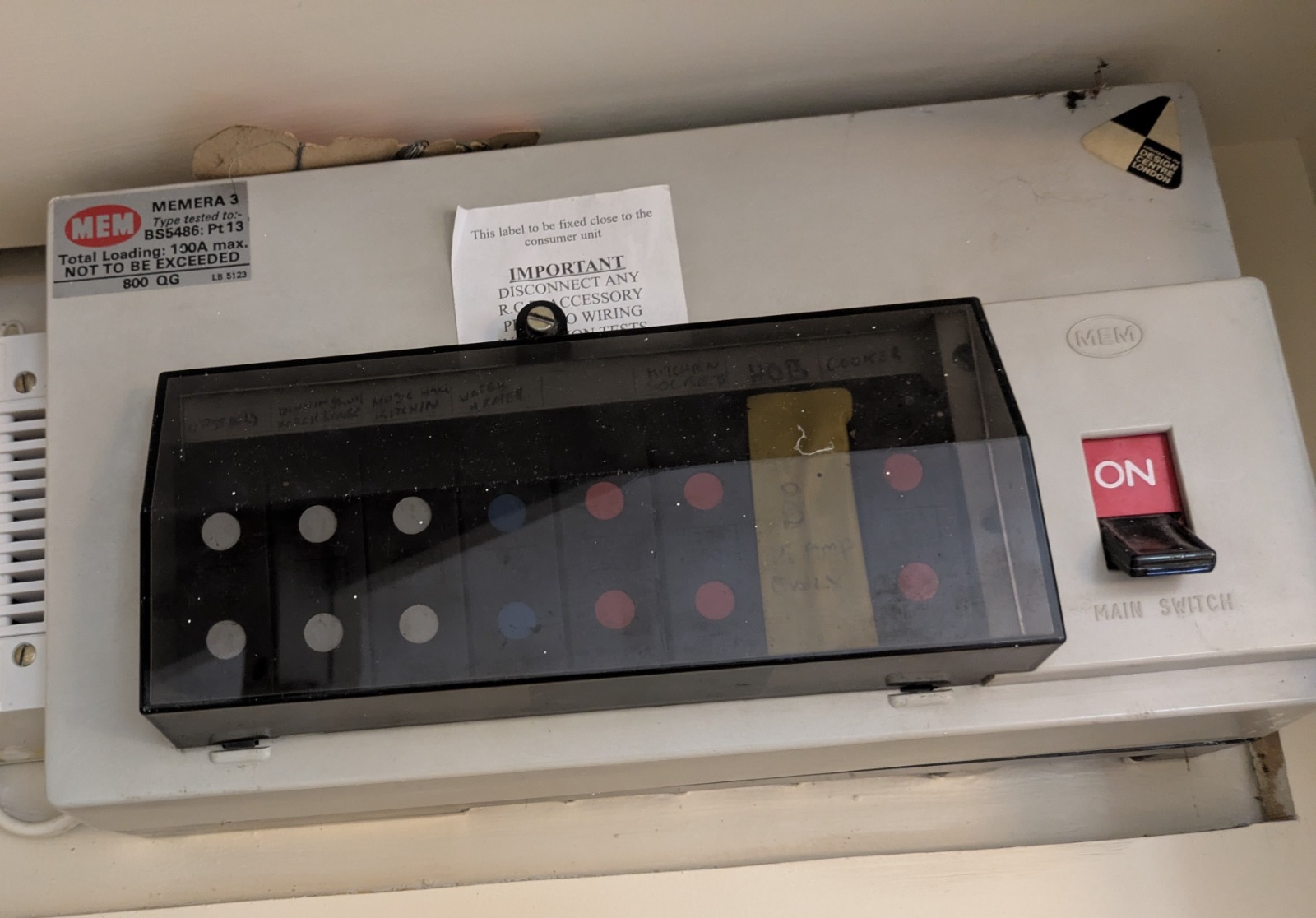
We recently attended a converted stables property in Hartley Wintney where the customer was losing power to the whole house. The fault had started over the weekend and was happening at random.
The main RCD switch kept tripping.
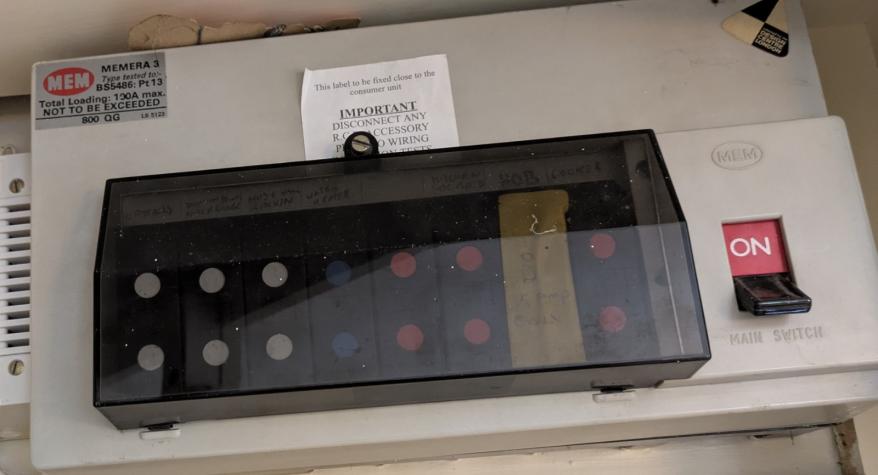
That made the problem more disruptive because the consumer unit was fed from an RCD main switch arrangement. When the fault occurred, it affected all circuits protected by that RCD, rather than isolating only one circuit.
The customer had already narrowed the issue down and suspected the lighting circuit was involved. That was useful information, but the cause still needed proper fault finding.
Why does an RCD trip?
An RCD trips when it detects current leaking to earth.
This can happen because of a faulty appliance, damaged cable, water inside electrical equipment, a poor connection, faulty outdoor lighting, or a problem with fixed wiring.
An RCD is designed to disconnect the supply quickly when it detects this type of fault. That protection is important, but repeated tripping means something needs investigating.
At this Hartley Wintney property, the main RCD was tripping randomly. There was no single appliance being switched on that caused it. The fault was intermittent, which often points towards moisture, damaged wiring or equipment breaking down under certain conditions.
Why can one lighting fault affect the whole house?
One lighting fault can affect the whole house when the consumer unit is arranged with a main RCD switch protecting multiple circuits.
This type of arrangement is more disruptive than individual RCBO protection. With individual RCBOs, a fault on one circuit is more likely to disconnect that circuit only. With an RCD main switch arrangement, one fault can remove power from several circuits or the whole installation depending on how the board is configured.
At this property, the fault was connected to the lighting circuit, but the customer was experiencing loss of power to the whole house because the main RCD kept operating.
That is frustrating for the customer because the symptom feels bigger than the cause. A fault in an outside light can still take out power elsewhere if the protective arrangement allows it.
What did we check first?
We started by checking what was connected to the lighting circuit.
The customer had already identified that the lighting circuit seemed to be causing the problem. We then looked at the number of lights on that circuit and found that it also included outside lights.
That was an important clue.
Outside lighting is often exposed to rain, frost, temperature changes and general weathering. If water gets into a fitting, junction box or connection, it can cause an earth leakage fault and trip the RCD.
This is especially common when a fault starts suddenly after wet weather or appears randomly rather than every time a switch is operated.
Can water in an outside light trip an RCD?
Yes, water inside an outside light can trip an RCD.
Outdoor lighting needs to be installed with suitable equipment, correct cable entries and proper weather protection. Over time, seals can fail, fittings can crack, glands can loosen, and water can get into places it should not.
At the Hartley Wintney property, the cause of the tripping was water in an outside light.
The light was connected to the lighting circuit, and the water ingress was enough to cause the main RCD to trip. That explained why the problem appeared random and why the customer was losing power even though the issue was outside.
Why did the fault seem random?
The fault seemed random because water-related electrical faults can change depending on moisture, temperature and movement.
A damp fitting may not trip the RCD constantly. It may trip when more moisture is present, when the fitting warms up, when wind moves the cable, or when the insulation resistance drops low enough for the RCD to operate.
This is why intermittent faults can be difficult for customers to pin down.
The lighting may work one minute and trip the next. The customer may reset the RCD and everything works for a while, only for the fault to return later.
That pattern often points towards moisture or a fault that changes with conditions.
Was the incoming supply the problem?
The incoming supply was considered and ruled out during the fault-finding process.
When a whole property loses power, it is sensible to consider whether the issue is inside the installation or connected to the supply. In this case, the evidence pointed back to the lighting circuit and then to the outside lighting connected to that circuit.
Once the outside light was identified as the source of the fault, the issue could be dealt with directly.
That is the point of proper fault finding. You follow the symptoms, test the likely causes and avoid guessing.
What repair did Wessex Electrical Services complete?
We disconnected the faulty outside light, fitted a waterproof box and ordered a replacement light.
This made the circuit safe and stopped the faulty outside fitting from continuing to affect the rest of the installation.
We then returned with the new light, installed it and confirmed the fault was fixed.
The final result was a working lighting circuit, no more random RCD tripping from that outside light, and a customer who was no longer dealing with unexpected loss of power to the whole house.
Why outside lights need proper weather protection
Outside lights need proper weather protection because they are exposed to conditions that indoor fittings never see.
Rain, wind, frost, UV exposure and temperature changes all affect outdoor electrical equipment. A fitting may look fine from the outside but still have water inside the enclosure or around the connections.
Poorly sealed cable entries, cracked fittings, loose covers and unsuitable junction boxes can all create problems.
Once water gets in, it can cause tripping, corrosion, poor connections and damage to the fitting.
This is why outdoor electrical equipment should be installed using suitable fittings, proper glands, correct enclosures and sensible cable routes.
Should you keep resetting an RCD that trips?
You should not keep resetting an RCD without finding out why it is tripping.
If an RCD trips once and resets normally, it may be linked to a one-off event or an appliance fault. If it keeps tripping, there is a reason.
Repeatedly resetting it can make the fault worse and may leave the installation in an unsafe condition. If the RCD trips again, especially after rain or when a particular circuit is switched on, the cause needs proper investigation.
In this Hartley Wintney case, the customer did the right thing by arranging fault finding rather than ignoring the problem.
What are the warning signs of a lighting fault?
Warning signs of a lighting fault can include flickering lights, repeated lamp failure, buzzing, burning smells, tripping circuits, water inside fittings, lights working intermittently or outdoor lights failing after wet weather.
At this property, the main warning sign was the main RCD tripping and causing loss of power to the whole house.
That is disruptive and needs attention.
A lighting fault can be simple, but it can also point to damaged wiring, moisture, failed fittings or poor connections. The safest approach is to identify the cause and repair it properly.
FAQs: RCD Tripping and Lighting Faults in Hartley Wintney
Can an outside light trip the whole house?
Yes. If an outside light has water inside it and the circuit is protected by a main RCD, the fault can trip the RCD and affect other circuits in the property.
Why does water in a light fitting cause tripping?
Water can create a path for current to leak to earth. The RCD detects that leakage and disconnects the supply.
Why does the RCD trip randomly?
Random RCD tripping can happen when a fault changes with moisture, temperature or movement. Water inside an outside light can cause intermittent tripping, especially after wet weather.
Should I keep resetting the RCD?
No. If the RCD keeps tripping, the cause should be investigated. Repeated resetting does not repair the fault.
Can a lighting circuit cause loss of power to the whole house?
Yes. If the consumer unit has an RCD main switch arrangement, a fault on one circuit can affect several circuits or the whole installation.
Is a main RCD switch arrangement ideal?
A main RCD switch arrangement can be more disruptive because one fault can disconnect multiple circuits. Modern consumer units often use individual RCBOs to reduce this inconvenience.
Can Wessex Electrical Services replace faulty outside lights?
Yes. We can disconnect faulty equipment, make the circuit safe, fit suitable outdoor accessories and install replacement outside lights where required.
Do you carry out lighting fault finding in Hartley Wintney?
Yes. Wessex Electrical Services carries out lighting fault finding, RCD tripping investigations and outside lighting repairs in Hartley Wintney and the surrounding Hampshire area.
Lighting fault finding in Hartley Wintney
Wessex Electrical Services carries out lighting fault finding and electrical repairs for homeowners in Hartley Wintney and the surrounding Hampshire area.
We investigate tripping RCDs, faulty outside lights, flickering lights, failed LED fittings, buzzing switches, intermittent lighting, repeated lamp failure, loose connections and lighting circuits that keep causing problems.
We assess whether the fault is with the lamp, fitting, switch, outdoor light, fixed wiring, circuit protection or consumer unit.
Once the cause has been found, we explain the options clearly and carry out the necessary repair.
Wessex Electrical Services Ltd is NAPIT registered, Which? Trusted Trader endorsed, Trading Standards Approved and TrustMark registered.
If lights in your Hartley Wintney home are flickering, tripping or causing loss of power, contact Wessex Electrical Services to arrange professional testing and fault finding.
Call 01252 590250.
Email - Via our contact form